

How to Pack Furniture for Moving: The Short Answer
Clean and dry each piece, take apart whatever comes apart, pad soft materials first with moving blankets or paper, then hold that padding in place with plastic wrap. Protect corners and glass, load your heaviest furniture first, and strap everything down. That order matters because furniture is heavy, oddly shaped, and easy to scratch or dent during packing and transport.
This guide is a step by step guide for anyone moving large, awkward, or fragile items, whether it’s a cross-town hop or a haul across state lines. And plenty of people fit that description: the U.S. Census Bureau reported that 11.8% of the population moved to a different residence in 2024, with 2.1% moving to a different state. Instead of packing room by room, pack by damage risk. Furniture fails in predictable ways: abrasion, impact, compression, moisture, shifting, disassembly errors, and body strain. Every step below exists to protect against one of those.
Start With an Inventory and a “Move, Sell, or Store” Decision
Before you buy a single roll of wrap, walk through your home and list every large piece. Taking photos of each furniture piece as it looks now gives you a record of any existing scuffs or loose joints. Flag anything fragile, antique, or hard to replace, because those items need extra layers of packing materials later.
Then measure. Note the width, height, and depth of each big piece, and measure your destination doorways, halls, stairs, and any elevators. Measure twice. Padding adds bulk, so a sofa that barely clears a doorway naked may not clear it wrapped.
For long distance moving, especially if you are still comparing rentals, floor plans, and neighborhood logistics while moving to South Dakota, confirm the size of the new rooms before paying to move oversized sofas, dining sets, or heavy bedroom furniture. Weigh the truck space against replacement cost. A worn dresser that won’t fit the new bedroom is often cheaper to replace than to haul.
Gather the Right Materials for Packing Furniture
Each material does one job. Choosing the right materials for the jobs you actually have saves money and prevents damage. The best materials for packing furniture are simple ones used correctly.
- Moving blankets and furniture pads: your first layer of extra padding against scratches and dents.
- Stretch wrap and plastic wrap (furniture wrap): shrink wrap holds padding in place and acts as a light moisture barrier, and stretch wrap conforms around odd shapes.
- Packing paper: a breathable wrap for surfaces and a filler for gaps and empty spaces during packing.
- Bubble wrap: the air filled bubbles cushion fragile parts like glass and knobs. Keep it off finished wood.
- Cardboard sheets and corner protectors: stabilize glass and shield high-impact edges.
- Mattress bags and a sofa-style furniture cover: keep large soft goods clean and dry.
- Painter’s tape, packing tape, labeled plastic bags, and a tool kit: for hardware and disassembly.
- Dollies, furniture sliders, moving straps, and gloves: for moving weight without hurting yourself or the floors.
One firm rule: plastic wrap should never sit directly against wood or leather for long, since trapped moisture can discolor the surface. Save packing tape for cardboard and boxes, not for finished furniture, and avoid any adhesive that could leave sticky residue on a finish.
Prep Each Piece of Furniture Before You Wrap It
Empty every drawer and shelf. Removing the contents lightens the load and takes stress off the frame during the carry. Wipe each surface with a soft cloth and let it dry fully, because grit left under a blanket grinds against the finish and can leave fine scratches by the time you unwrap.
Take off what detaches: cushions, glass shelves, knobs, and table legs. Fewer sticking-out parts means less to snag or snap. Before you loosen anything on a complex furniture item, photograph how the hardware sits so reassembly is guesswork-free. Drop screws, bolts, and brackets into labeled plastic bags, one per piece, then use packing tape to fix each bag to the wrapped padding of its furniture. Never tape directly to a finished surface or leather; a tape that leaves sticky residue can lift the finish when you peel it later.
Should You Disassemble Heavy Items Before Moving?
Usually, yes. Taking bed frames, tables, modular sofas, and shelving apart cuts the weight you carry, shrinks the bulk you maneuver, and helps large items clear tight doorways. Removing legs alone can turn an impossible corner into an easy one. U-Haul’s expert advice is to disassemble furniture and move the heavy pieces with dollies, furniture sliders, and straps rather than muscle. Keep track of all the pieces so nothing gets misplaced.
The exception is particleboard and flat-pack furniture. Those pieces often don’t survive repeated assembly, and the fasteners can strip out. If a flat-pack unit is stable and fits through the door, it may transport better wrapped and intact than dismantled.
How to Wrap Furniture When Moving, by Material (Wood, Upholstery, Leather, Glass)
Different surfaces fail in different ways, so wrap furniture by material rather than treating everything the same. Wrapping each piece carefully by type is what keeps your belongings arrive safely at the other end.
Wood furniture and antique furniture
Start with a moving blanket or pad, then add cardboard to the corners where dings happen. Keep plastic wrap off the finish entirely. Wood furniture reacts to humidity swings, and sealed plastic traps the moisture that causes trouble. The Indiana Historical Society’s furniture care guidance stresses lifting and supporting pieces rather than dragging them, which also protects loose joints and veneer, and blankets over flat surfaces help prevent scratches. Handle older pieces slowly and check that joints are solid before you lift.
Upholstered sofas and chairs
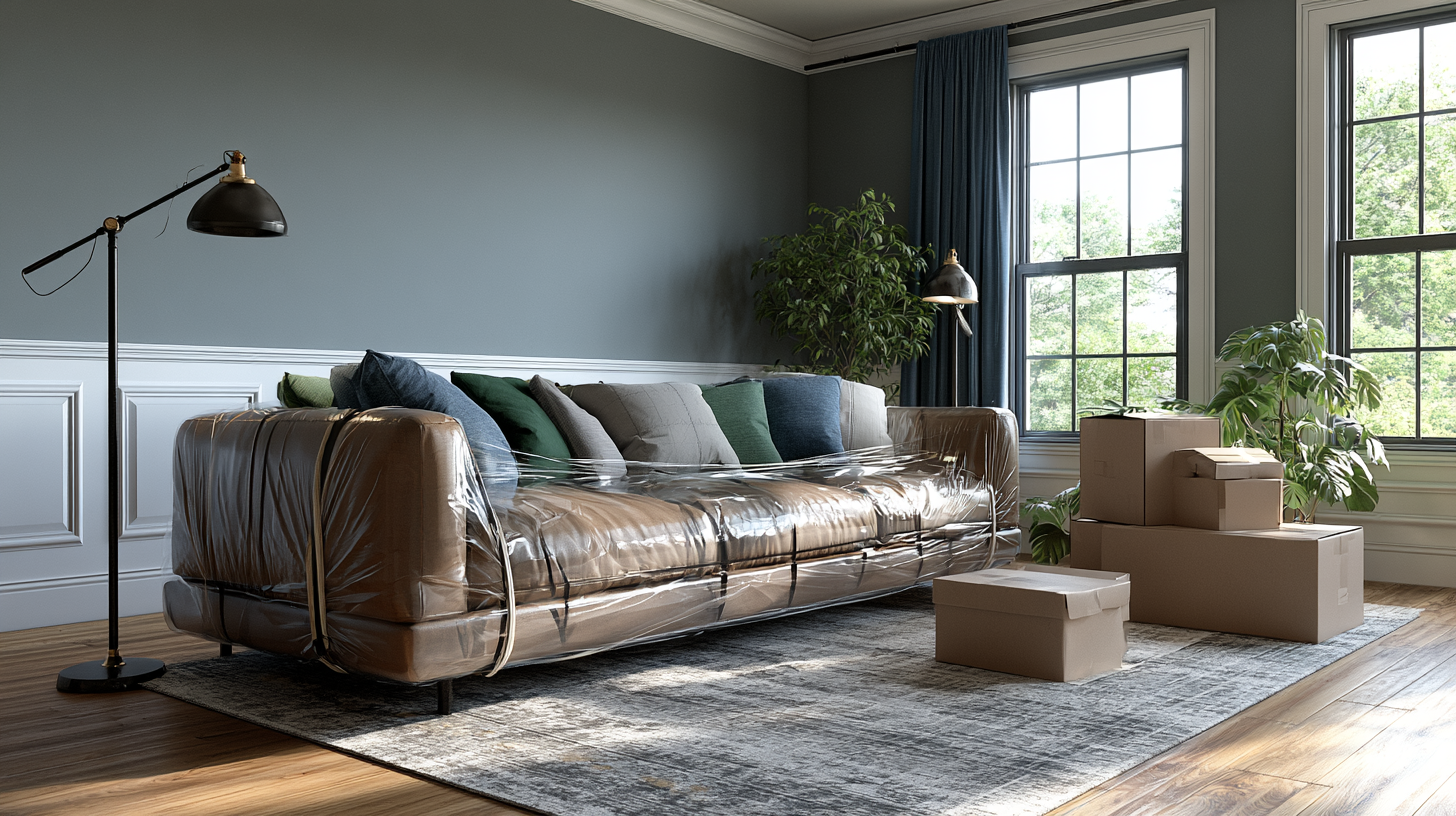
Vacuum the fabric and make sure it’s dry so you don’t seal moisture inside. Remove the legs and cushions where that helps. Wrap the body of upholstered items in paper or moving blankets first, then apply light stretch wrap over the padding. If a couch travels lying down, never stack heavy boxes on it. U-Pack warns that the weight can damage the springs.
Leather furniture
Put a breathable padded layer against the surface before any plastic wrap goes near it. Leather and faux leather can discolor when plastic traps moisture against them, so skip direct plastic contact and keep the piece dry. Avoid long stretches sealed in wrap.
Glass tabletops, mirrors, and other fragile items
Remove the glass wherever you can. Protect the edges of glass tabletops, since a chipped edge weakens the whole panel, then add bubble wrap around knobs and delicate trim before you sandwich flat glass tops between cardboard sheets. Transport glass vertically, standing on edge, not flat, and never stack heavy items on top of these fragile items.
Dressers, cabinets, and bookcases
Empty the contents and pull out loose shelves. Secure doors and drawers with moving bands or stretch wrap over a layer of padding, never with packing tape on the finish. Keep the hardware bag fixed to the wrapped item so nothing wanders off into a random box.
Move Large Items Through the Home Without Injury
The heaviest risk in a move is often your own back. NIOSH sets a recommended weight limit of 51 pounds for a two-handed lift under ideal conditions, and real furniture moves are rarely ideal. Twisting, stairs, long carries, and poor handholds all drop that safe limit fast. OSHA’s guidance is to reduce the load weight and use devices for heavy lifting instead of forcing it.
Clear your pathways first and remove doors from their hinges if a piece needs the extra inch. Use furniture sliders for short, controlled repositioning across a floor, then lift and load properly rather than dragging the whole way. Team-lift anything awkward, keep the load close to your body, and don’t twist while carrying. Move light items on their own and save the heavy items for team carries. Dollies and straps carry the weight so you don’t have to. Even the best movers rely on these tools rather than raw strength.
How to Load a Moving Truck So Furniture Doesn’t Shift
Load the heaviest furniture first to build a stable base, and position it toward the front of the moving truck near the cab with the weight balanced side to side. Good weight distribution keeps the truck easier to steer, since uneven loads make it harder to control. Use wrapped dressers and sturdy chests as “walls,” and tuck a blanket between any two pieces that touch so they don’t rub in transit.
Strap large pieces to the tie downs with ratchet straps at each tier, then fill the gaps with soft items like bagged bedding or cushions so nothing has room to slide. Moving blankets wedged into open spaces help prevent shifting on rough roads. Non fragile items can absorb light contact, but keep heavy boxes off delicate wood, upholstery, and sofa springs. This loading order follows what U-Haul and Extra Space both recommend: largest and heaviest first, secured, with gaps filled.
If the furniture will spend days in transit or temporary storage, as can happen when moving to South Dakota from another region, add breathable padding, label hardware clearly, and photograph the entire piece before loading the moving truck. That extra prep pays off across the whole process when items sit longer than a single afternoon.
If You Hire Professional Movers, Document Everything
For interstate jobs, the FMCSA requires movers to give you a written estimate, key consumer-rights documents, and an inventory. That inventory should note existing damage or unusual wear, and both you and the mover sign it. Read those notes carefully and photograph every piece of furniture before pickup so you have your own record.
Understand your liability options. Full Value Protection makes the mover responsible for the item’s value, while Released Value coverage pays only 60 cents per pound per article, which is very little for a heavy dresser. Note that inadequate self-packing can reduce a mover’s liability if the way you pack boxes and wrap items caused the damage. Never sign a blank document, ask what they wrap versus what you must prep, and confirm any disassembly or reassembly fees. Book early: the FMCSA notes peak season runs May through September, when line-haul charges climb.
Unpack, Reassemble, and Re-Anchor Your Furniture
Inspect your pieces before you sign the final paperwork, while you still have leverage on a damage claim. Reassemble using the labeled hardware bags and the photos you took during disassembly. Let wood and leather acclimate to the new room’s temperature and humidity before you seal them in covers or place them near a heat source.
Then re-anchor. Anti-tip straps often come off during a move and get forgotten, but the CPSC’s Anchor It campaign urges securing dressers, bookcases, and TVs to the wall, since new dressers ship with anti-tip devices for a reason. Keep the heaviest items low in drawers and on shelves so nothing is top-heavy once it’s set up.
Frequently Asked Questions About Packing Furniture for Moving
How soon should you start packing before you move?
Begin four to six weeks out with your inventory and supply run for the right materials. If you’re moving during peak season, roughly May through September, book any labor or movers early, because both availability and rates tighten.
Do you empty the chest of drawers when moving?
Yes, especially for heavy or fragile contents, which lightens the load and protects the frame. Light clothing can sometimes stay if the drawers are secured, but many movers require drawers to be empty, so confirm ahead of time.
What items will movers not pack?
Hazardous materials, flammables, perishables, and plants are typically off-limits, and movers often decline high-value irreplaceable items. Check the specific list with your mover before packing day.
What should you throw away before moving?
Broken or worn furniture that isn’t worth the truck space, duplicate pieces, and anything that won’t fit the new floor plan. This ties back to your move, sell, or store decision: if a furniture piece fails on space or condition, deal with it before it costs you a mile of gas.
If you enjoyed this post, please consider supporting this site by buying us a virtual coffee.

