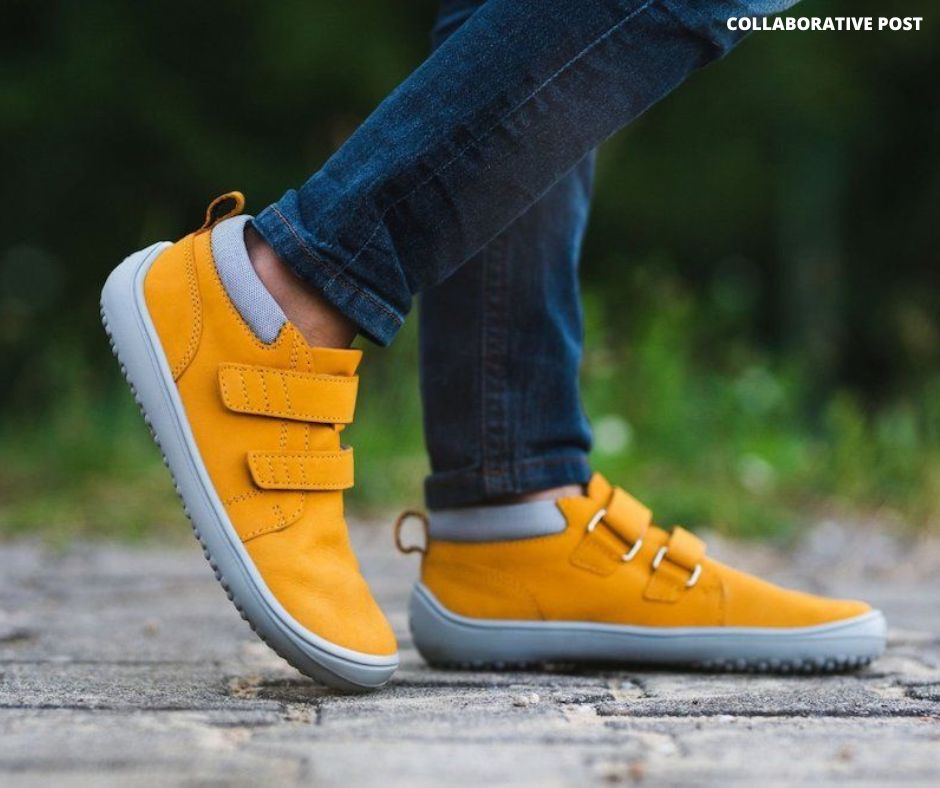
When it comes to buying shoes for your children, you wouldn’t think twice about putting them in a pair of trainers. However, there’s a growing belief that the best shoe is maybe no shoe at all which is why in this article I wanted to talk about barefoot shoe benefits.
Medical professionals are under the impression that wearing shoes can hinder a child’s walking and brain development. The solution: going barefoot. Or, more likely, wearing barefoot shoes that will imitate the same effects but with additional protection.
These minimalist-type shoes typically have little to no heel elevation, lots of room around the toes and a thin sole. Essentially, they are designed to allow as much natural movement and posture as possible and still look like regular shoes.
But are these shoes actually suitable for children? Are they more beneficial than your standard shoe or trainer? Let’s find out!
Barefoot shoe benefits for kids: sensory development
The feet are a child’s main contact with the Earth, keeping them grounded and balanced. It’s amazing how many nerve endings are located in the feet, which process important information about the types of surfaces being touched.
Allowing your child to experience walking barefoot helps them to create a sensory feedback loop between their brain and body and their feet. Essentially, it provides opportunities for your child’s brain to develop and grow.
When they start to grow older, you may notice improvements in their problem-solving skills, language skills and emotional regulation as a result.
Barefoot shoe benefits for kids: balance
Balance can be complex for a child, involving many different processes from different parts of the body all at once.
The most common cause of poor balance and posture is weakened muscle strength in the feet. This can be caused by wearing regular shoes because the support prevents the muscles in the feet from functioning as they should normally.
Naturally shaped shoes for children can greatly improve their balance and ability to walk. Not only do they increase the strength of their feet, but they can also improve perception and structural alignment.
These improvements in posture and balance can subsequently prevent other health conditions from occurring in later life, such as back pain and joint degeneration.
Does barefoot walking have health benefits for children?
Barefoot shoes don’t just improve a child’s ability to walk and perceive the natural world, they can help to improve physical and mental health. This includes helping to reduce their stress levels and enhance immunity.It even mimics the effects of well-established therapeutic techniques like acupuncture, which is known to reduce the risk of heart disease. The focal points of the feet respond well to being stimulated, providing the child with a sense of relaxation.
How to choose barefoot shoes for children
When choosing barefoot shoes for children, consider the following factors:
- Fit: Ensure the shoes fit well and don’t slip off. They should allow enough room for the toes to move freely.
- Flexibility: Look for shoes that are flexible and allow the feet to move naturally.
- Material: Choose shoes made of breathable materials that allow the feet to stay cool and dry.
- Durability: Children’s shoes take a lot of wear and tear, so choose ones that are durable and can withstand the activity.
- Protection: Make sure the shoes provide enough protection for the child’s feet, while still allowing them to feel the ground.
- Age-appropriate: Choose shoes that are appropriate for the child’s age and stage of development.
Remember, the goal of barefoot shoes is to mimic the natural experience of being barefoot while still providing protection
Summing up
Barefoot shoes can be a good idea for children, as they promote natural foot function and support healthy foot development. By allowing the feet to move freely and strengthening the muscles, barefoot shoes can help children develop a strong foundation for walking and running. However, they may not be suitable for all children and all activities. For example, barefoot shoes may not provide enough protection for high-impact sports or uneven terrain.
It’s important to consider your child’s individual needs and the activities they will be doing when deciding whether barefoot shoes are a good idea. It may also be a good idea to consult a pediatrician or podiatrist to ensure that barefoot shoes are appropriate for your child.