It is no secret that the ink we chose at nineteen doesn’t always suit the person we are in our thirties or forties. Whether it is a faded ankle design from a girls’ holiday, a heavy tribal armband, or a script tattoo that simply doesn’t reflect your life anymore, outgrowing old body art is completely normal. In fact, there are plenty of lifestyle shifts driving why tattoo removal is growing in popularity across the UK.
However, once you decide to make a change, you are usually faced with a major dilemma: should you commit to removing the tattoo completely for clear skin, or simply use laser sessions to lighten the ink for a fresh, artistic cover-up?
Before booking into a tattoo studio or a laser clinic, here is what you need to know about how modern laser physics works, the realistic timelines for both options, and how to protect your skin from scarring.
Option 1: Laser Fading for a Cover-Up (2 to 4 Sessions)
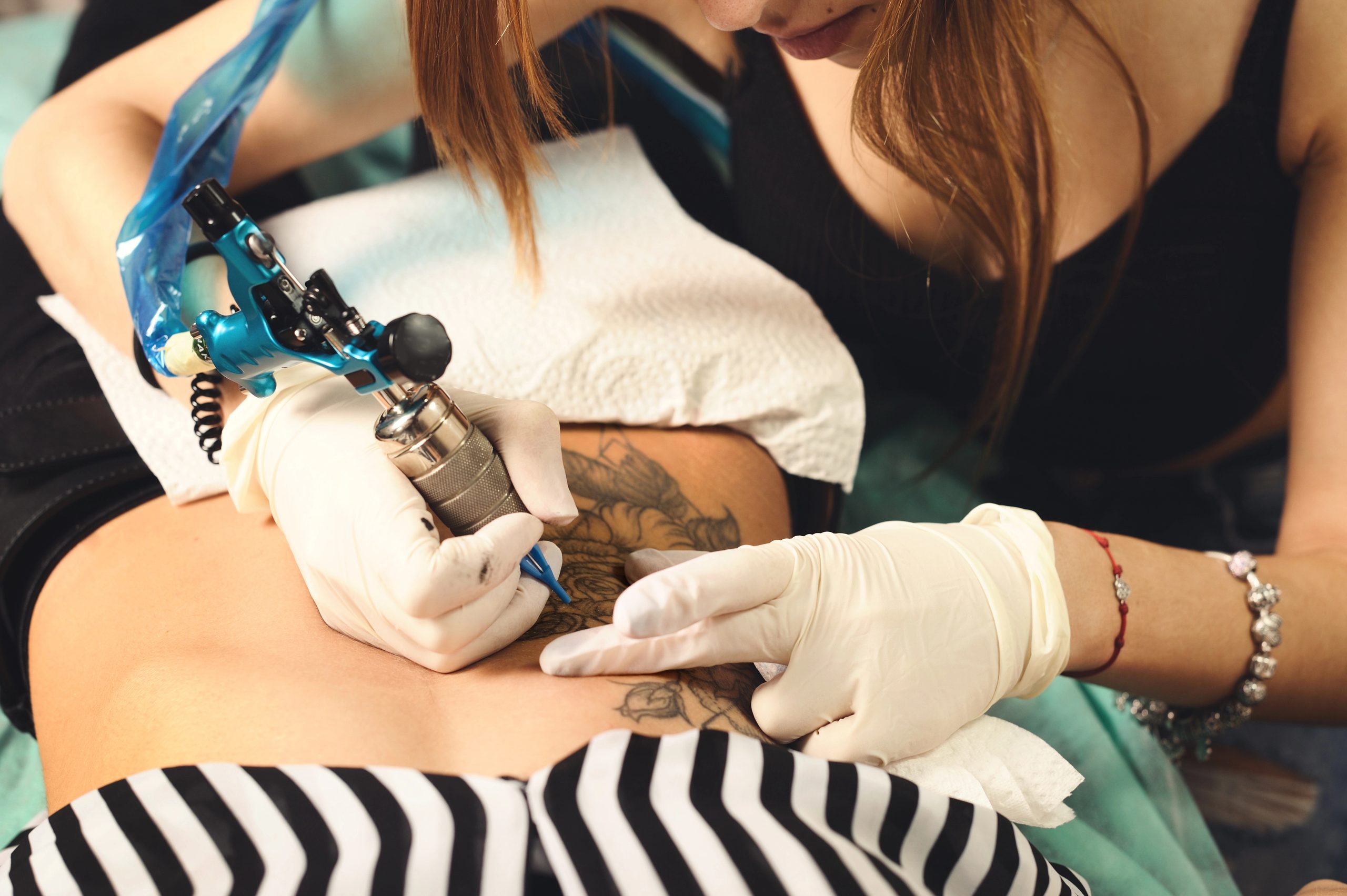
In the past, if you wanted to cover up an old tattoo, your tattoo artist had only one option: go bigger, bolder, and much darker. Because tattoo ink is translucent, placing new ink directly over dense, old black pigment severely limits the colours, shading, and fine-line styles your artist can use. Worse still, old heavy ink often bleeds through a fresh cover-up after a few years.
Today, most reputable tattoo artists recommend laser lightening before starting a cover-up project.
- How It Works: Instead of aiming for 100% clearance, a laser specialist targets the heaviest, darkest areas of the old tattoo over just two to four sessions.
- The Benefit: Fading the original pigment by 50% to 70% opens up your design options dramatically. You no longer have to settle for heavy black shading; your artist can use softer colours, delicate florals, or intricate linework without the old design showing through.
- The Waiting Window: After your final laser fading session, you must allow the dermis to heal completely—typically 8 to 12 weeks—before your tattoo artist inks over the area.
Option 2: Complete Tattoo Removal (4 to 12 Sessions)
If your goal is completely clear, ink-free skin—perhaps for a wedding dress, a career change, or simply a fresh start—then a full course of medical-grade laser tattoo removal is the safest clinical route.
Why Your Immune System Does the Heavy Lifting
One of the biggest myths about laser tattoo removal is that the laser “burns” the ink out of your skin. In reality, tattoo removal is a partnership between precision laser physics and your body’s own immune system.
Tattoos are permanent because the ink particles deposited into your dermis are physically too large for your white blood cells (macrophages) to swallow and clear away. During a laser session, ultra-short nanosecond pulses of light energy pass harmlessly through the top layer of your skin and are absorbed selectively by the tattoo pigment:
- 1064nm Wavelength: Targets deep black, dark blue, and dark pigments.
- 532nm Wavelength: Targets red, orange, and warmer shades closer to the surface.
When the ink absorbs this concentrated energy, it shatters into microscopic dust via a photoacoustic effect. Over the following weeks, your lymphatic system sweeps up those tiny fragments and flushes them out naturally. Because your body needs time to clear the shattered ink and heal the skin between sittings, sessions should always be spaced at least 8 weeks apart. Treating a tattoo more frequently doesn’t speed up fading; it simply causes unnecessary skin trauma and wastes money.
Not All Lasers Are Equal: Active vs. Passive Q-Switched Systems
If you have ever heard horror stories about laser tattoo removal leaving behind raised scars or blisters, the culprit is almost always the type of machine used.
Many bargain clinics use low-cost, imported passive Q-switched lasers. Passive systems rely on an uncontrolled discharge of stored energy, which creates excessive thermal heat in the surrounding skin tissue—leading to burns, severe blistering, and textural scarring.
By contrast, choosing a clinic that operates a British-made, actively Q-switched Nd:YAG solid-state laser ensures that every pulse is precisely timed and controlled. True active Q-switching delivers clean photomechanical energy that fractures the ink while leaving surrounding skin tissue intact—making it safe even on darker skin tones when operated by an experienced specialist.
4 Ways to Help Your Tattoo Fade Faster Between Sessions
According to NHS advice on non-surgical tattoo removal, following strict aftercare protocols and choosing an experienced practitioner are vital for safe healing. Because your lymphatic system is responsible for clearing shattered ink after each visit, your daily habits play a huge role in how few sessions you will need:
- Drink 2 to 3 Litres of Water Daily: Your lymph fluid is roughly 96% water. Staying well-hydrated keeps your lymphatic drainage moving efficiently.
- Stay Active: Unlike your bloodstream, your lymphatic system has no central pump—it relies on muscle movement to circulate fluid. Walking, yoga, or light cardio (once the initial 48-hour healing period has passed) boosts circulation and speeds up ink clearance.
- Avoid Smoking and Excess Alcohol: Studies show that smoking constricts blood vessels and can slow down tattoo clearance significantly over a course of treatments.
- Keep the Area Out of the Sun: UV exposure triggers melanin production in the skin, which means the laser cannot safely target the ink beneath without risking pigmentation changes. Always apply broad-spectrum SPF 50+ once the skin has healed.
Whether you decide to lighten an old mistake for a beautiful new cover-up or clear the skin entirely, pairing medical-grade technology with a little patience gives your skin the safest start to its next chapter.