Nothing derails a busy school morning quite like turning on the shower and being met with icy water, or hearing an ominous clunking sound coming from the kitchen cupboard when the frost is thick outside. For most parents, the central heating system is out of sight and out of mind—right up until the moment it locks out with a flashing error code.
When you are already focused on making your home work harder for your family and finances, an unexpected boiler breakdown forces a stressful decision: do you pay an engineer to patch up your existing boiler one more time, or is it more cost-effective to invest in a modern, high-efficiency replacement?
Before you spend hundreds of pounds on emergency parts for an ageing system, here is how to weigh up a repair against a replacement, how to pick the right boiler for a growing household, and what should always be included in a fixed-price installation.
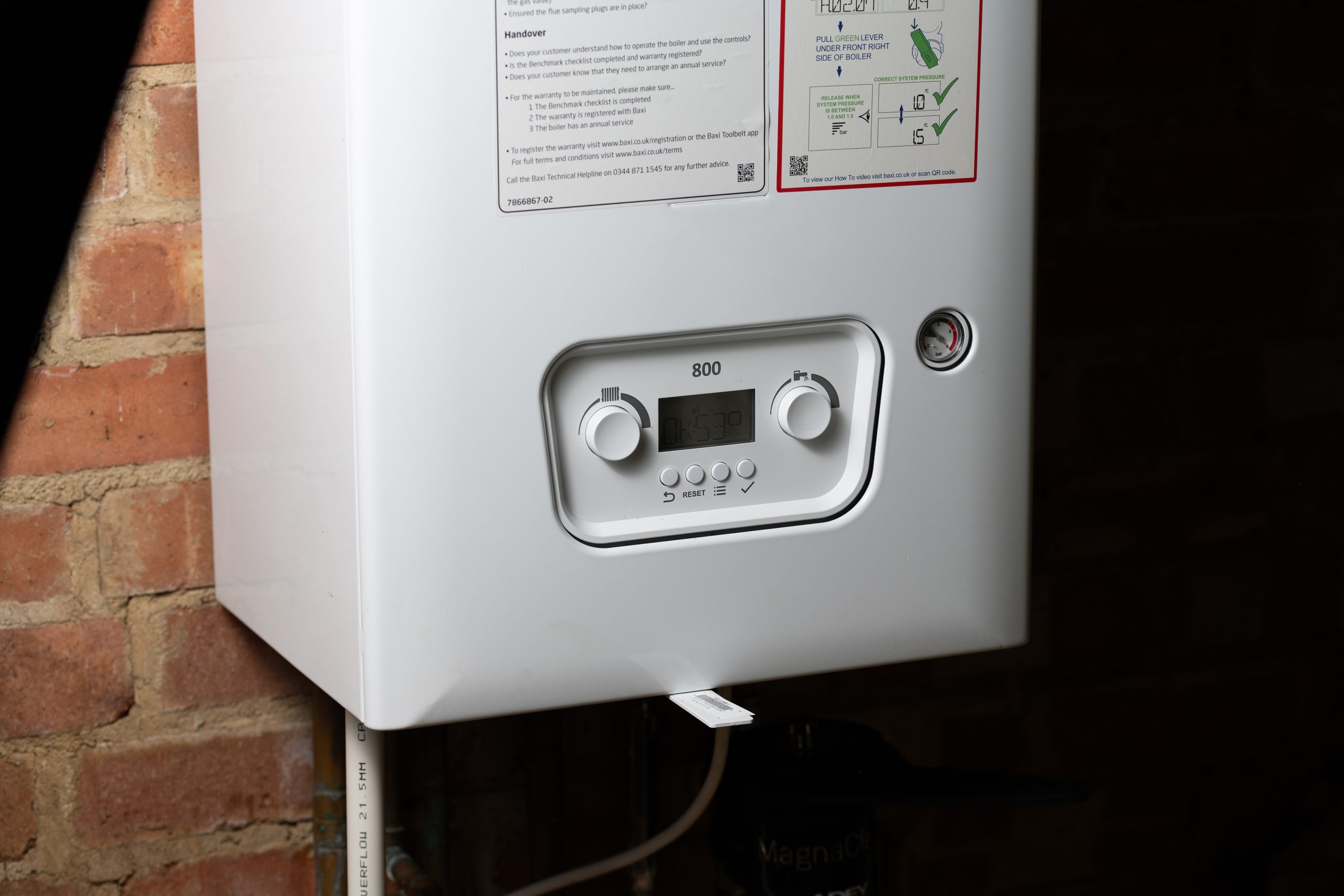
Option 1: When a Straightforward Boiler Repair Makes Sense (Under 8 Years Old)
If your boiler was installed within the last seven or eight years and has been serviced regularly, a sudden breakdown doesn’t automatically mean you need a brand-new unit. Modern condensing boilers are packed with safety sensors that will shut the burner down over relatively minor component wear.
- The 50% Cost Rule: Heating engineers generally advise that if a boiler is under eight years old and the cost of the repair is less than 50% of the price of a replacement—such as replacing a sticking diverter valve, a faulty ignition electrode, or an expansion vessel—repairing it is the smartest financial move.
- Check Your Manufacturer Warranty First: Many homeowners forget that premium boilers installed by accredited engineers carry 7 to 12-year parts and labour guarantees. So long as you have kept up with your annual Gas Safe service, the manufacturer will often replace the faulty component free of charge.
- Simple Pressure Drops: If your boiler is displaying a low-pressure fault code (such as F22 on a Vaillant or E119 on a Baxi), it may simply need topping up back to 1.0–1.5 bar via the filling loop after bleeding your radiators.
Option 2: The 4 Warning Signs It Is Time to Replace Your Boiler (10+ Years Old)
Once a domestic gas boiler passes the 10 to 12-year mark, throwing money at repeated callouts quickly becomes a false economy. If your system is showing any of the following symptoms, upgrading to a modern A-rated condensing boiler will save you money and stress over the long run:
- Your Boiler Is “Kettling” and Rumbling: If your boiler sounds like a whistling or rumbling kettle when it fires up, limescale and black iron oxide sludge have built up on the primary heat exchanger. Restricted water flow causes the water inside the heat exchanger to boil and steam, which puts immense thermal stress on internal seals and joints.
- Replacement Parts Are Becoming Obsolete: For boilers over 12 years old, sourcing genuine circuit boards (PCBs), gas valves, and fans becomes increasingly difficult and expensive. Paying £450+ to replace a heat exchanger or PCB on an un-warranted 13-year-old boiler rarely makes financial sense when another major component could fail three months later.
- Your Gas Bills Are Creeping Up Every Winter: Older non-condensing or early-generation boilers often operate at 70% to 78% efficiency—meaning over a fifth of every pound you spend on gas escapes straight out of the flue pipe. Modern A-rated Worcester Bosch and Vaillant condensing boilers operate at over 92% to 94% ErP efficiency.
- Your Family Has Outgrown Your Hot Water Supply: A small 24kW combi boiler that suited a couple in their first home will struggle once you add a loft conversion, a second bathroom, and teenagers running back-to-back showers.
Combi vs. System Boilers: Matching the Boiler to Your Family Home
When planning a replacement, choosing the right type of boiler for your property’s bathroom count is just as important as picking a reliable brand:
- Like-for-Like Combi Boilers (Ideal for 1–3 Bedrooms & 1–2 Bathrooms): Combination boilers heat water instantaneously from the mains without needing a hot water cylinder in the airing cupboard or cold water tanks in the loft. Compact models like the Worcester Bosch Greenstar 4000 or Vaillant ecoFIT Pure fit neatly inside a standard kitchen wall cupboard and deliver strong hot water flow for smaller family homes.
- High-Flow Combi & System Boilers (Ideal for 4–6+ Bedrooms & Multiple Bathrooms): If two or three people in your house regularly shower at the exact same time, a standard combi boiler will split the flow rate between taps. Upgrading to a high-flow combi (such as the Greenstar 8000+ or Vaillant ecoTEC Exclusive) or pairing a pressurised system boiler with an unvented hot water cylinder guarantees mains-pressure hot water to every bathroom simultaneously.
Because correct kilowatt (kW) sizing and manufacturer accreditation directly affect how long your heating system lasts, booking a new boiler installation with an accredited Gas Safe team—such as Chelmsford and Essex specialists Urban Heating & Cooling—unlocks exclusive 10 to 12-year parts and labour guarantees on flagship Worcester Bosch and Vaillant models.
4 Things Every Fixed-Price Boiler Installation Should Include
If you are gathering quotes to replace your boiler this year, never judge an estimate by the headline price alone. A cheap “box-swap” that hooks a brand-new boiler onto dirty, sludge-filled radiators will void your warranty and ruin your new heat exchanger within years.
Always check that your installer’s written, fixed-price quote includes these four essentials as standard:
- A Full Chemical System Flush: Before the new boiler is commissioned, the engineer should flush your existing radiators and pipework with chemical cleansers and inhibitors to remove corrosive black magnetite sludge.
- A Genuine Magnetic System Filter: Fitting a matching Worcester Bosch Greenstar, Vaillant Advance, or Adey MagnaClean filter on the return pipe captures metallic debris before it can ever enter your new boiler—and often adds an extra two years onto your manufacturer warranty.
- Smart, Load-Compensating Controls: According to Energy Saving Trust advice on heating controls, upgrading to modern room thermostats, programmers, and thermostatic radiator valves (TRVs) significantly reduces wasted energy. Smart controls like Bosch EasyControl, Vaillant sensoHOME, or Hive allow your boiler to modulate its flame down gently rather than burning at full power all day.
- Full Gas Safe & Building Regulations Certification: Your engineer must register the installation with Gas Safe, issue your Building Regulations compliance certificate (essential when you eventually sell your house), and register your extended 10-to-12-year guarantee directly with the manufacturer on handover day.
Whether you pay upfront or spread the cost across manageable monthly finance payments, replacing a tired boiler before it fails in the middle of January is one of the smartest investments you can make in your family home’s comfort, safety, and long-term value.