Nobody warns you about what pregnancy does to your legs. The bump gets all the attention, the nursery gets all the prep work, and meanwhile your ankles quietly start to look like they belong to someone else entirely.
By the third trimester, fluid retention is so common that it has its own clinical name: oedema. And it is, frankly, uncomfortable.
The good news is that compression socks, specifically pregnancy compression stockings for maternity relief, are one of the most straightforward, midwife-approved ways to ease that heaviness and keep circulation moving through long days on your feet, hours spent sitting at a desk, or restless evenings when your legs just will not settle.
The gentle, graduated squeeze they apply works with your body to push fluid back toward your heart, reducing that tight, puffy feeling most pregnant women know all too well.
With so many options now on the market, from functional medical-grade styles to ones that actually look good under a maternity dress, we have rounded up the best maternity compression socks worth adding to your kit right now.
Why compression socks matter during pregnancy
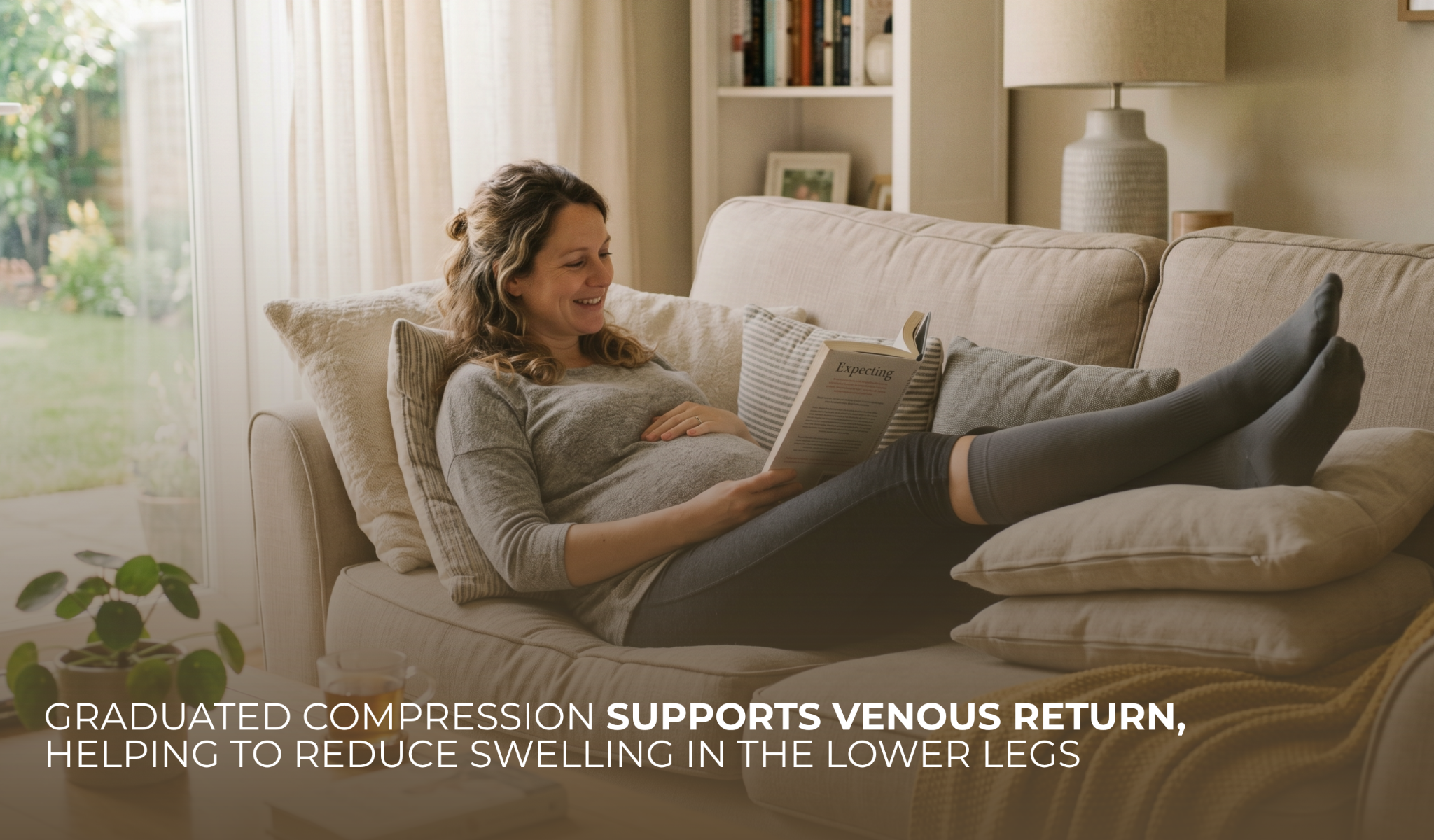
During pregnancy, your body produces significantly more blood and fluid to support your growing baby. That extra volume puts pressure on the veins in your legs, slowing the return of blood back to your heart.
The result?
Fluid pools in your feet, ankles, and calves, causing that familiar heavy, swollen feeling that tends to worsen as the day goes on.
Graduated compression socks work by applying the most pressure at the ankle, with the level easing gently as the sock moves up the leg. This helps to encourage blood flow upward, reducing fluid build-up.
Research suggests that wearing compression stockings during pregnancy may reduce oedema-related discomfort and could also lower the risk of varicose veins and deep vein thrombosis (DVT), a condition for which pregnant women carry an elevated risk. Always check with your GP or midwife if you have concerns about circulation during pregnancy.
For most women, a compression level of 15-20 mmHg is a comfortable starting point, while those with more significant swelling may benefit from 20-30 mmHg under medical guidance. Here are our top picks.
1. Vim & Vigr: Best overall for style and everyday comfort
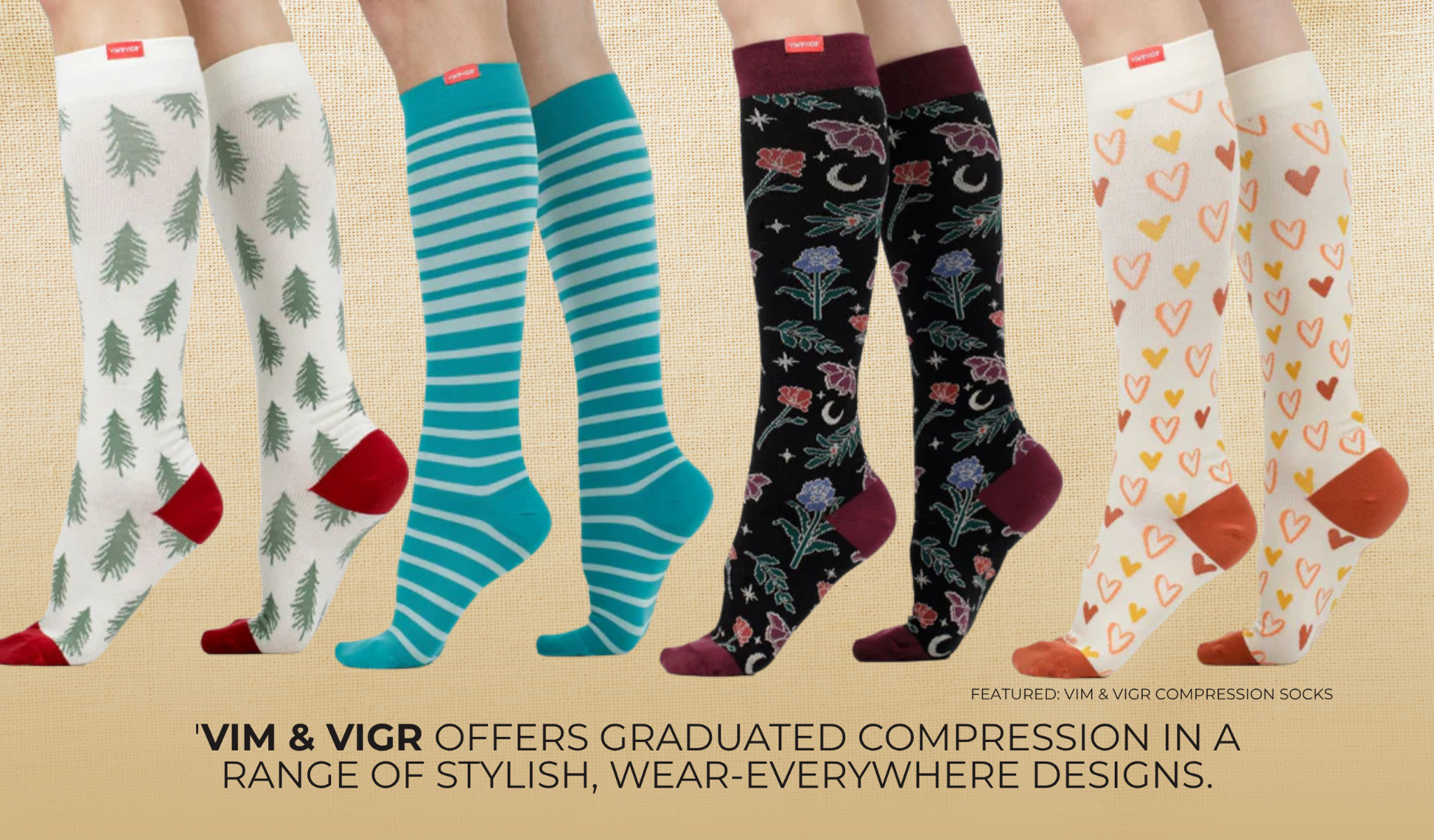
If you have ever imagined compression socks and pictured beige medical stockings, Vim & Vigr is here to change your mind completely. This US-based brand has built its reputation on the idea that functional legwear does not have to look clinical, and their maternity range is a strong example of that philosophy in practice.
Available in both 15-20 mmHg and 20-30 mmHg graduated compression, their knee-high styles are made from a breathable nylon and moisture-wicking blend that holds its shape over long days.
The range covers a generous size selection, and the prints, from bold stripes to subtle textures, are genuinely nice enough to wear with a midi dress or under wide-leg trousers without drawing attention for the wrong reasons.
Customer reviews on Vim & Vigr’s pregnancy compression stockings for maternity relief frequently mention improved comfort during long shifts and significantly less swelling by the end of the day. For pregnant women who want a sock they can slip on in the morning and genuinely forget about, these maternity compression socks are the best gift.
- Compression: 15-20 mmHg / 20-30 mmHg
- Best for: All-day wear, work, travel, and style-forward dressing
- Material: Nylon, spandex blend
- Why we love it: Genuinely good-looking designs that hold their compression through repeated washing
2. Comrad: Best for ease of wear
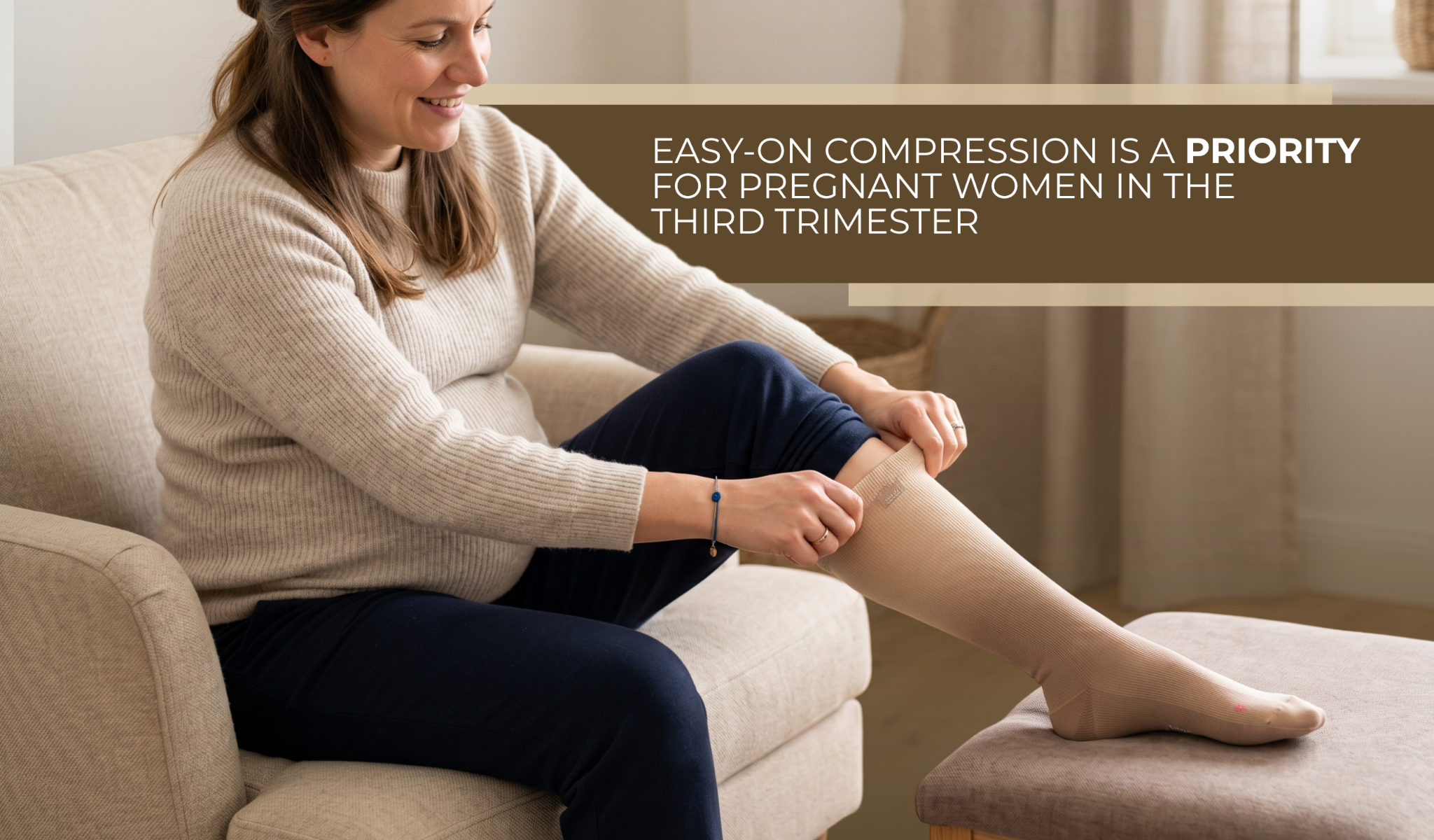
Getting compression socks on when you are eight months pregnant and bending over is a feat in itself. Comrad understands this, and their socks consistently receive praise for being significantly easier to pull on than many competitors, without sacrificing compression performance.
Their recycled cotton blend feels soft against the skin and is well-suited to women who run warm during pregnancy. The 15-20 mmHg level makes them accessible for daily wear without feeling restrictive.
- Compression: 15-20 mmHg
- Best for: Third trimester wearers who need a fuss-free option
- Material: Recycled cotton and nylon blend
- Why we love it: Easier on-and-off in late pregnancy
3. Wellow: Best for wide-calf fit
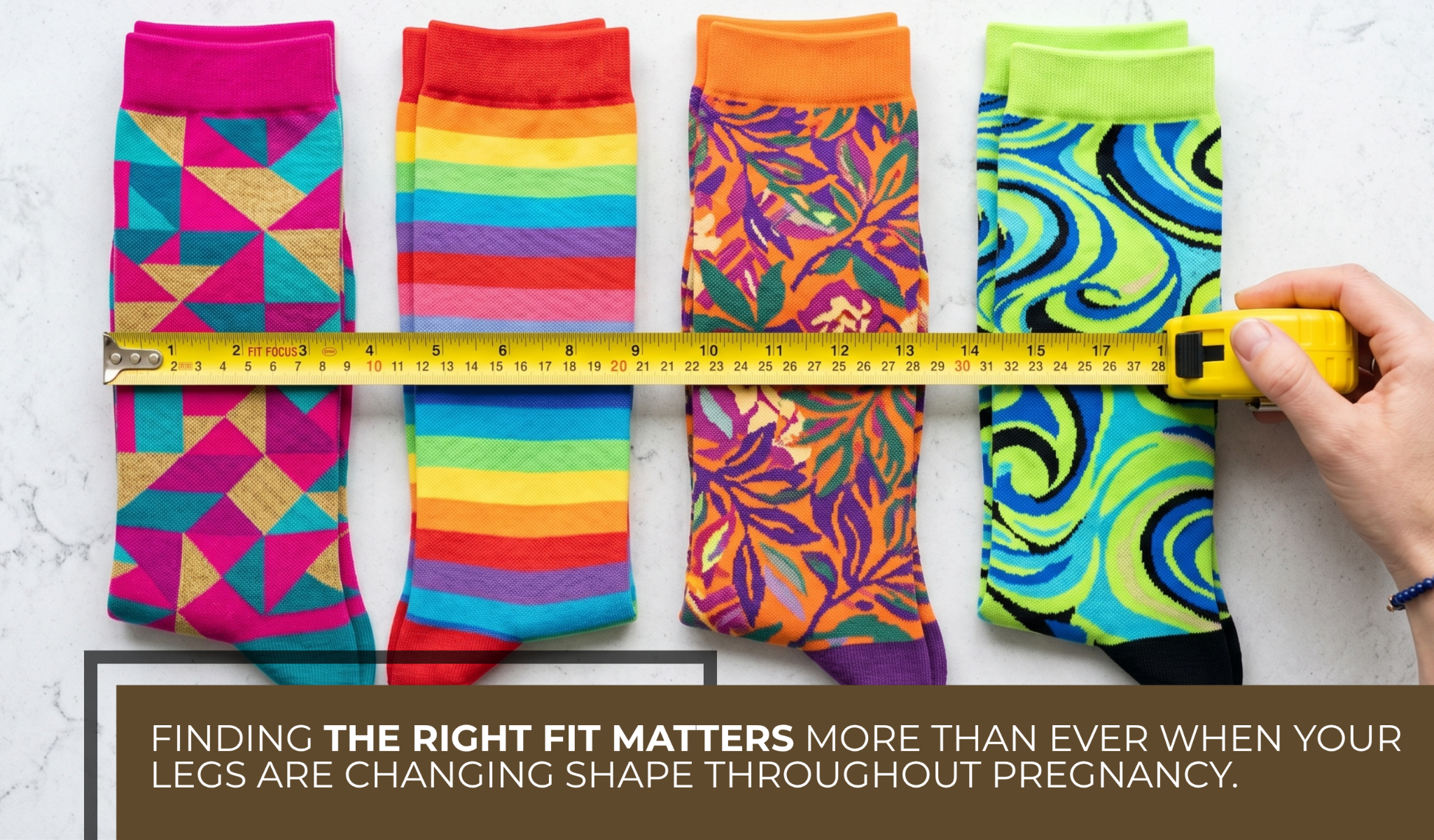
Calf circumference can change noticeably during pregnancy, and standard compression socks can feel uncomfortably tight at the widest point of the leg. Wellow has specifically designed their socks to accommodate a wider calf comfortably, with an 18-25 mmHg compression range that sits between standard light and medium grades.
Their colourful designs and inclusive sizing make them a popular choice for women who have struggled with the fit of other brands during pregnancy.
- Compression: 18-25 mmHg
- Best for: Women with wider calves or those who find standard socks restrictive
- Why we love it: Thoughtful fit engineering for pregnancy-specific leg changes
4. Motif Medical: Best medical-grade option
For women whose midwife or GP has recommended a higher level of support, Motif Medical offers an FDA-listed maternity compression sock at 20-30 mmHg. The construction prioritises a stay-put elastic band that does not pinch or roll down, and the breathable nylon blend is designed for extended wear.
This is a solid choice for women managing more pronounced oedema or those with a history of varicose veins. As with any medical-grade compression, consult with your healthcare provider before wearing.
- Compression: 20-30 mmHg
- Best for: Women with clinically significant swelling or elevated vascular risk
- Why we love it: FDA-listed, medical-grade support with comfortable construction
5. Bombas: Best for cushioned comfort
Bombas has made its name on comfort-first construction, and their compression socks for everyday wear translate well to pregnancy. The extra cushioning at the heel and ball of the foot is particularly welcome when the additional weight of late pregnancy makes every step feel heavier than usual.
These sit at the lighter end of compression (15-20 mmHg) and are better suited to women experiencing mild swelling or looking for a more supportive everyday sock rather than a therapeutic solution.
- Compression: 15-20 mmHg
- Best for: Mild swelling, general comfort, everyday wear
- Why we love it: Superior cushioning for comfort-focused dressing
6. Sockwell: Best for natural fibres
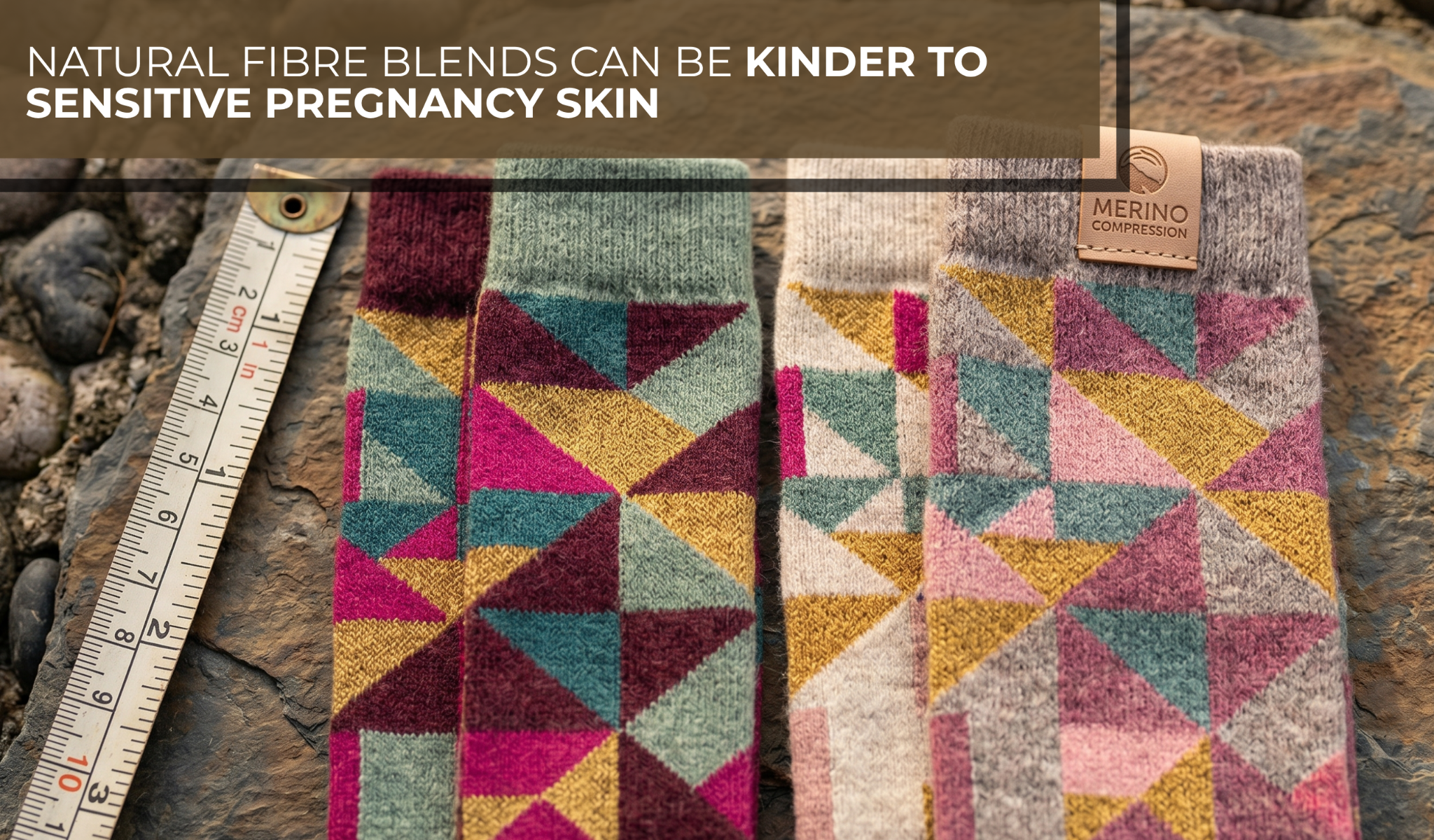
Pregnancy can make skin more sensitive than usual, and synthetic fibres that were previously unremarkable may suddenly feel scratchy or irritating. Sockwell uses merino wool and bamboo blends that are gentler against the skin, naturally temperature-regulating, and moisture-wicking.
Their graduated compression sits at 15-20 mmHg, and the brand offers a range of patterns and neutrals that work well for professional dressing or casual wear alike.
- Compression: 15-20 mmHg
- Best for: Women with sensitive skin or temperature regulation issues during pregnancy
- Why we love it: Natural fibre construction without compromising on compression performance
What to look for when buying maternity compression socks
With so many options available, a few key criteria will help narrow the choice down quickly:
- Compression level: 15-20 mmHg is appropriate for most pregnant women experiencing mild to moderate swelling. 20-30 mmHg may be needed for significant oedema but should be discussed with your midwife or GP first.
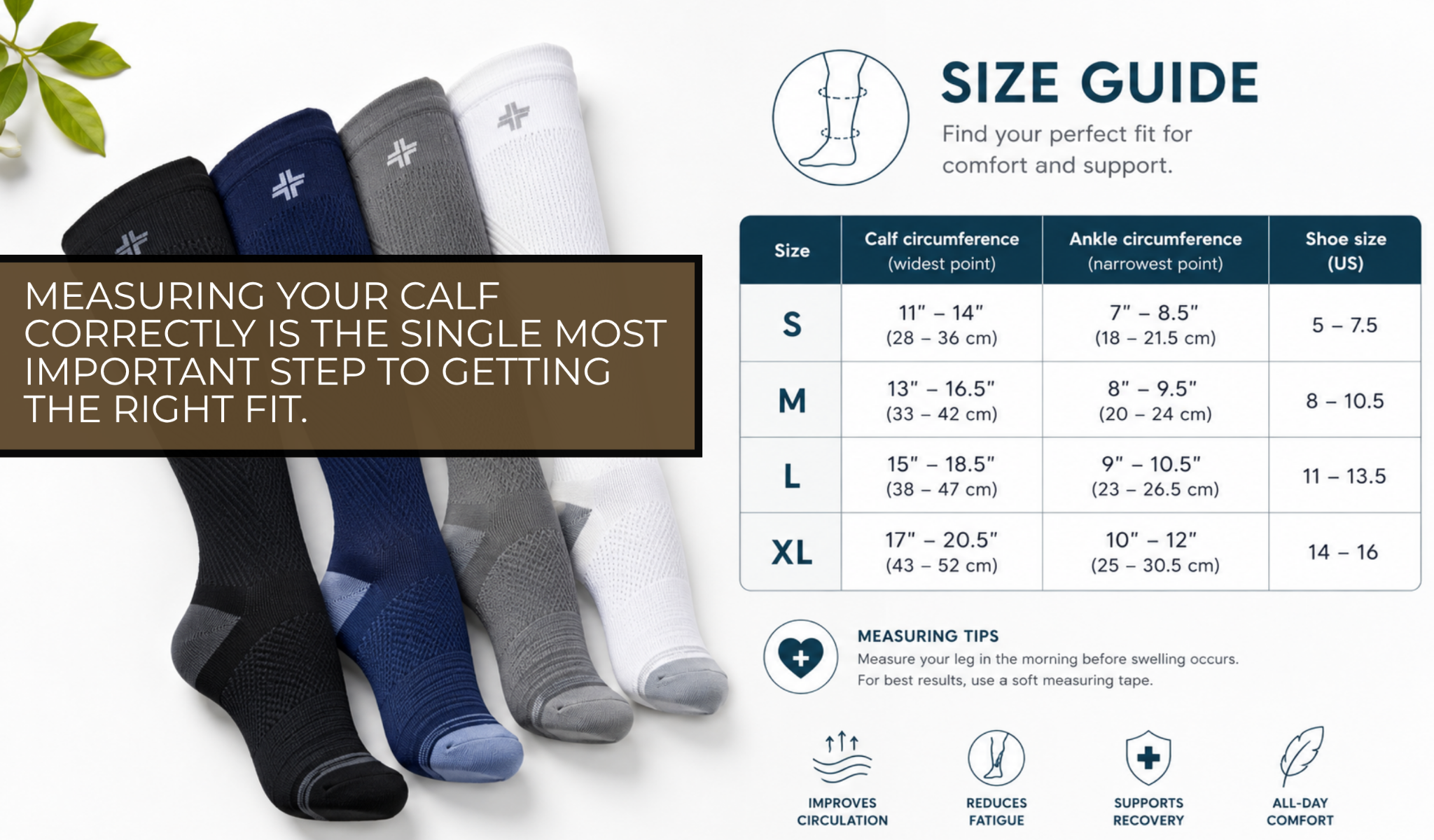
- Fit and sizing: Measure your calf circumference at its widest point and your ankle circumference for the most accurate fit. Poorly fitted compression socks can restrict circulation rather than support it.
- Material: Breathable, moisture-wicking fabrics are important during pregnancy when body temperature tends to run higher. Look for nylon-spandex blends or natural fibre options if your skin is sensitive.
- Ease of wear: As pregnancy progresses and bending becomes more difficult, ease of application matters. Some brands design specifically for this.
- Style: There is no reason to compromise. Brands like Vim & Vigr offer attractive designs that can be worn as part of a put-together outfit rather than hidden under trousers.
Final thoughts
Swelling in pregnancy is normal, but that does not mean you have to simply put up with it.
A well-fitted pair of maternity compression socks, worn consistently from morning, can make a real and noticeable difference to how your legs feel by the end of the day.
If you are new to compression wear, starting at 15-20 mmHg and building up is a sensible approach, and speaking with your midwife about your specific situation will always give you the most relevant guidance.
For a starting point that gets the balance of function, comfort, and design right, Vim & Vigr remains our top recommendation for everyday pregnancy wear.