There is a conversation many new mothers have quietly with themselves, usually somewhere between the six-week checkup and the first time they get dressed for something other than a school run. It is not dramatic.
It is just honest: the body that carried and delivered a baby may not feel like your body quite yet, and the path back to feeling well in it is not always clear.
For some women, diet and movement are enough. For others, particularly those navigating postpartum weight retention that has not resolved with fitness and lifestyle changes alone, the question shifts from
“What should I be doing?” to “What options actually exist?”
Endoscopic Sleeve Gastroplasty (ESG) is one of the most clinically supported non-surgical weight loss interventions currently available. It involves no incisions, no overnight hospital stay, and a recovery measured in days rather than weeks.
Crucially, it addresses weight at the level of physiology rather than willpower, which matters more than most conversations about postpartum bodies tend to acknowledge.
If you are based in or near Dallas and are past the recommended postpartum recovery window (typically at least twelve months after delivery, and after breastfeeding is complete), this is a guide to help you evaluate the providers worth considering.
For context on the broader shift toward non-surgical options, our women’s health section covers related lifestyle and medical topics in depth.
What to look for in an ESG provider
Not all ESG providers are equal. The procedure is technique-dependent, which means the performing physician’s volume of experience, fellowship-level training, and post-procedure support programme matter considerably. Three criteria tend to separate reliable clinics from the rest:
- The credentials and specific ESG experience of the performing physician
- The quality of the clinical environment where the procedure takes place
- The depth of the post-procedure support programme, particularly whether it includes dietitian and nurse practitioner access
With those criteria in mind, here are the five Dallas providers most worth evaluating.
1. Everself: Best for physician-led longitudinal care
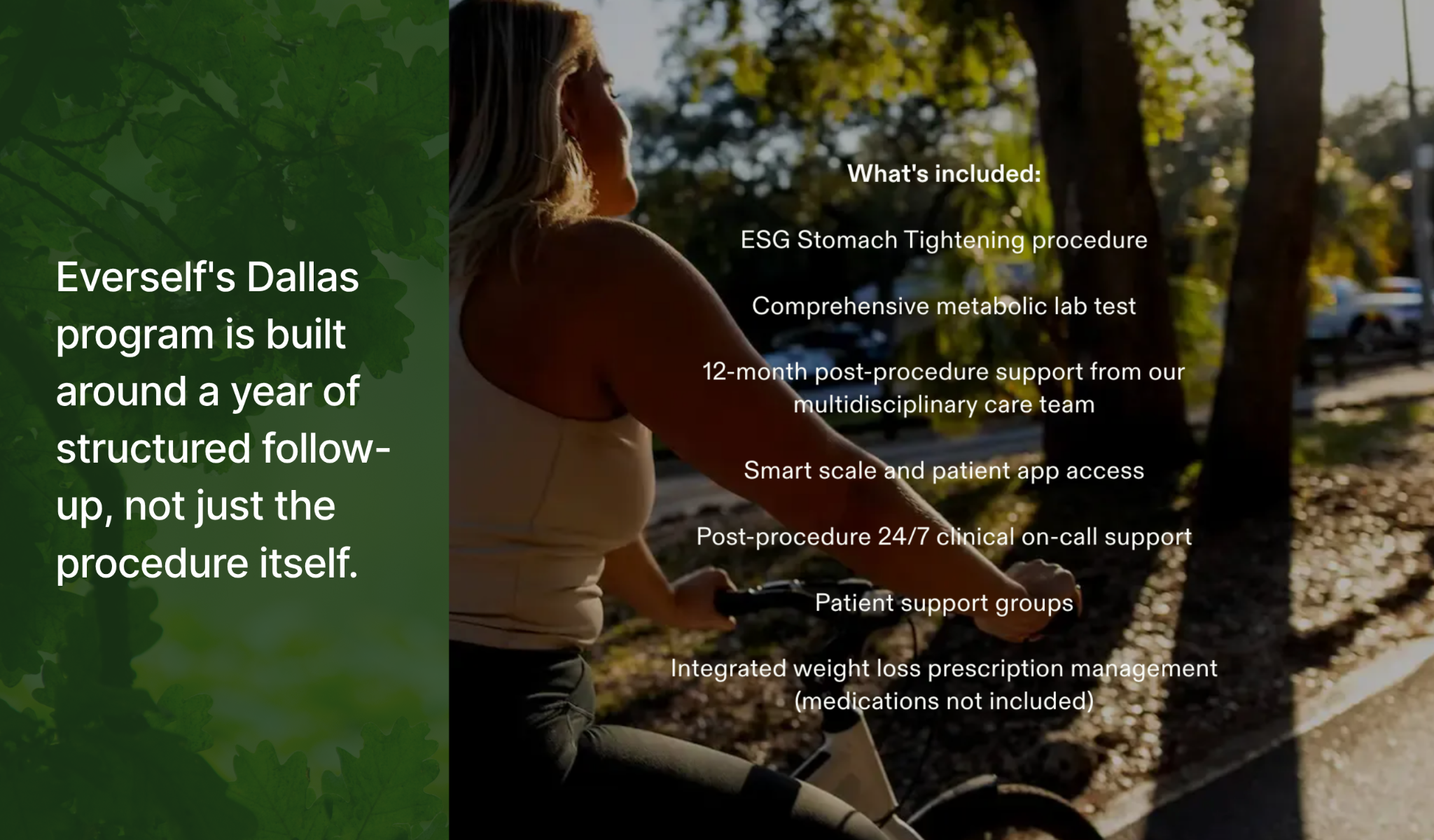
Everself stands apart from most weight loss clinics in Dallas because of how the programme is structured around the patient relationship, not just the procedure. The clinical model is built on the understanding that meaningful, sustained weight loss requires ongoing medical support: from the initial consultation through to the twelve-month follow-up.
The complete ESG Stomach Tightening procedure package in Dallas, TX includes twelve months of virtual longitudinal care, with registered dietitian access, nurse practitioner check-ins, and medication management where appropriate.
This is notably different from clinics that perform the procedure and leave patients to self-manage recovery.
The lead physician at Everself Dallas is an interventional gastroenterologist specialising in minimally invasive endoscopy. Everself physicians train directly under the mentorship of the inventor of ESG Stomach Tightening, which means the procedural standard is not adopted from secondary training but from the original clinical framework.
Procedures are performed at Legent Orthopedic Hospital Carrollton, approximately nineteen minutes from DFW Airport, and all consultations are conducted virtually, so you will only need to attend in person once for the procedure itself. For mothers with limited flexibility around childcare and work commitments, this model is practically significant.
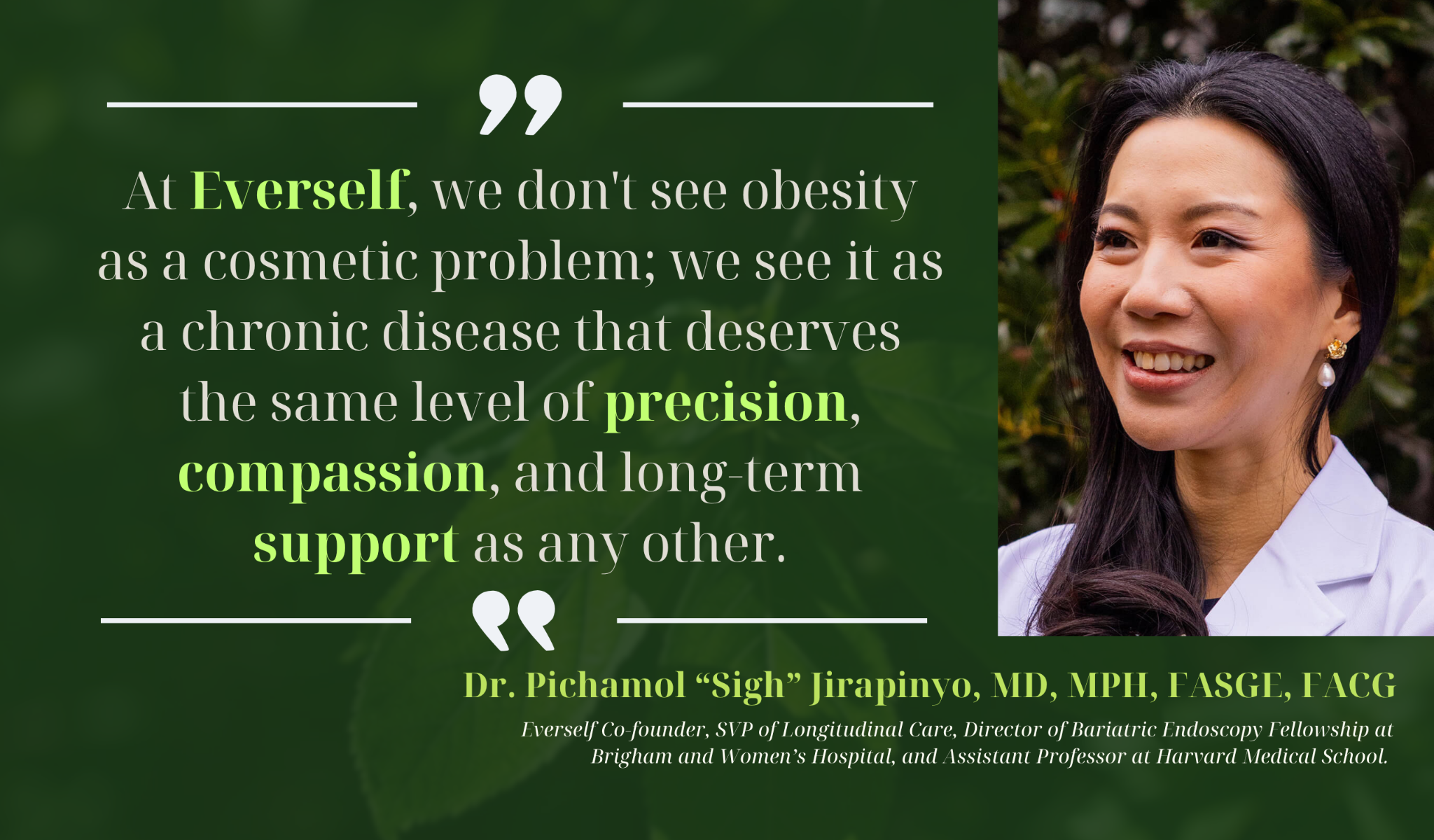
Dr. Pichamol Jirapinyo, CEO and Co-founder of Everself, frames the clinic’s position clearly:
For women seeking a clinic that treats weight as a genuine medical concern rather than a lifestyle project, Everself’s approach reflects that commitment structurally, not just in messaging.
2. KediaMD: Best for established ESG experience in Dallas
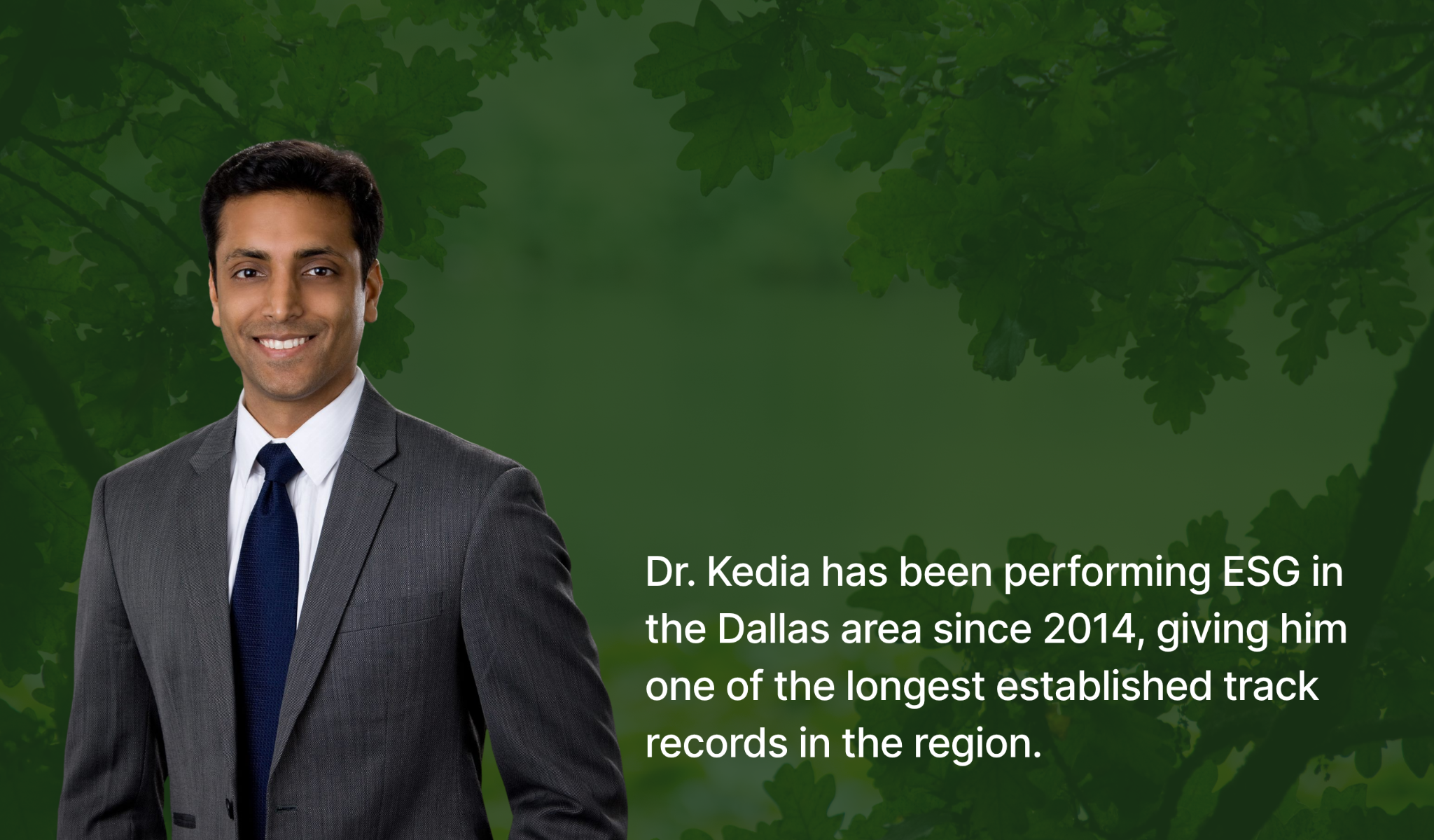
Dr. Prashant Kedia at KediaMD is one of the most experienced ESG practitioners in the Dallas area.
He has been performing the procedure since 2014, which places him among the earliest adopters of the technique in Texas. His affiliation with Methodist Dallas Medical Center provides a well-resourced clinical environment.
The practice offers ESG as a primary non-surgical weight loss option. Patients considering a single-practitioner experience with deep endoscopy credentials and established patient outcomes may find KediaMD worth investigating. Consultation-first assessment is available before any procedure commitment is made.
3. DFW Bariatric Institute: Best for a full-spectrum weight loss pathway
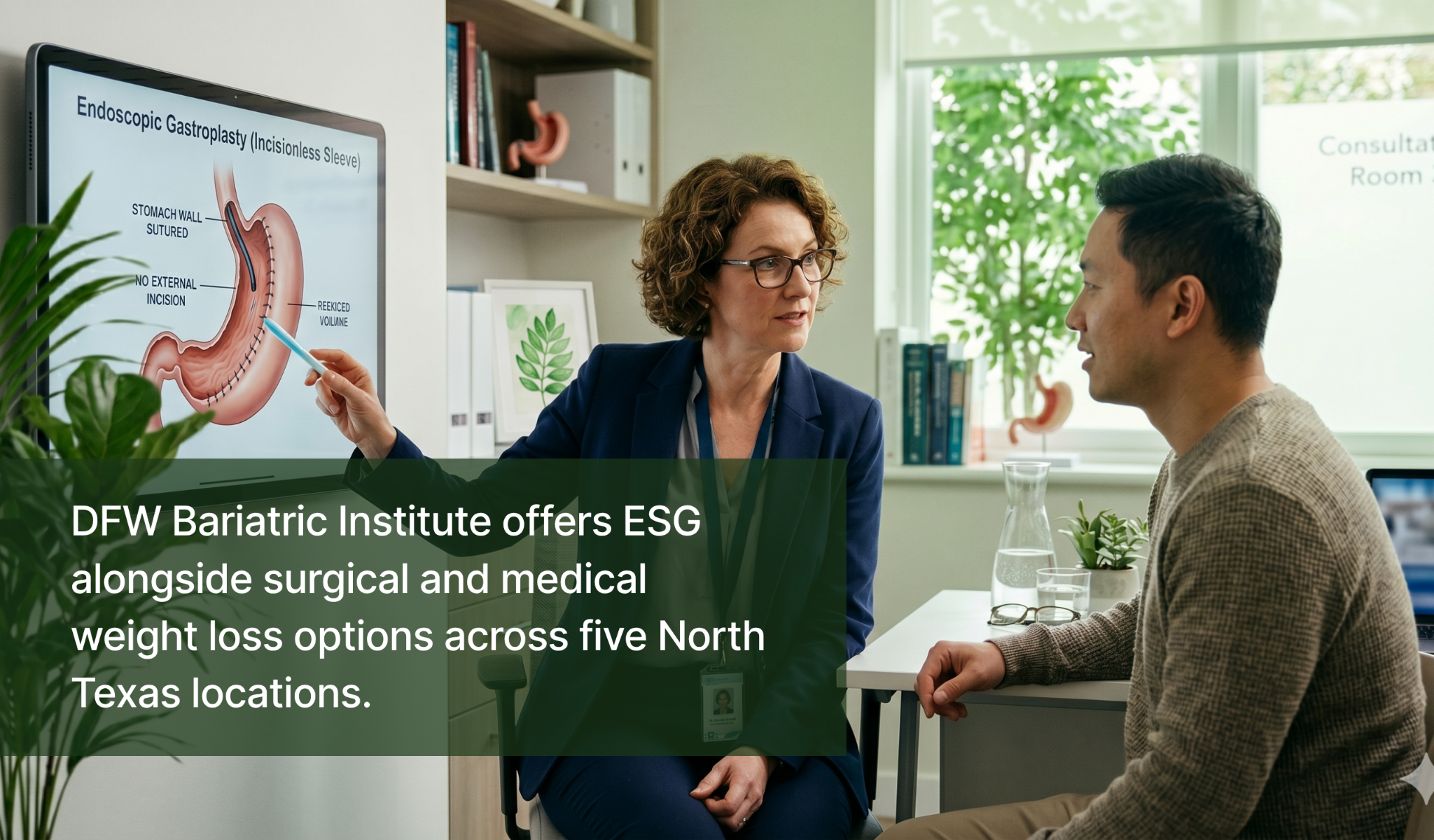
For women who want the option to discuss a wider range of weight loss pathways within a single clinic, DFW Bariatric Institute may be a useful option. It offers ESG alongside surgical procedures and a physician-supervised medical weight loss programme, which can be useful when the right approach is still being determined.
The practice operates five locations across North Texas, including a Dallas site, and assesses ESG candidacy through an initial consultation. The programme incorporates nutritional guidance and dietary planning as part of the post-procedure process.
4. DFW Bariatric Surgery: Best for multi-balloon and non-surgical variety
DFW Bariatric Surgery offers a broader menu of non-surgical weight loss options than most Dallas providers, including ESG (which they term the Accordion Procedure), the ORBERA gastric balloon, the Obalon swallowable balloon, and the ReShape dual balloon system.
This range may be useful for women who are earlier in the decision process and want to compare non-surgical approaches within a single consultation.
ESG is performed under sedation with no incisions. The practice serves patients across the Dallas and Fort Worth areas and offers a medical weight loss programme as a parallel option.
5. Methodist Health System: Best for hospital-system backing
For patients who prefer a hospital-system context, Methodist Health System has integrated ESG into its weight management clinical offering in Dallas.
The programme incorporates behavioural therapy, exercise guidance, and nutritional support alongside the procedure itself.
The hospital-system environment may appeal to women who want the reassurance of an institutional care infrastructure, particularly those with additional health concerns being managed in parallel. Initial consultation with a specialist is required to assess candidacy and fit.
A note for mothers specifically
ESG is not suitable during pregnancy or while breastfeeding.
Most providers require candidates to be at least twelve months postpartum, with breastfeeding fully weaned and baseline health markers stable.
If you are still in the early postpartum period, the most useful step is a preliminary consultation to understand what your options may look like at the right time, rather than delaying the conversation entirely.
Understanding the landscape now means you are better placed to act when the timing is right. It is also worth noting that ESG is most effective when supported by dietary and lifestyle adjustments over the following twelve months.
The strongest clinical outcomes are consistently associated with programmes that integrate that support, rather than treating the procedure as a standalone intervention.
Summary: how to approach the decision
Choosing the right ESG clinic after pregnancy is not just about finding a non-surgical weight loss option.
It is about finding a medical team that understands how much the body changes after birth, from metabolism and hormones to energy levels, appetite, mobility, and emotional readiness.
For women in Dallas, the best ESG clinics are the ones that combine clinical experience with realistic support before and after the procedure.
A strong program should offer clear evaluation, transparent guidance, nutrition support, follow-up self care, and a plan that fits into real life after pregnancy rather than adding more pressure.
Endoscopic sleeve gastroplasty may be worth considering for women who want a less invasive alternative to surgery, but it should always begin with a proper consultation and a full conversation about safety, timing, health history, and long-term expectations.
The right clinic will not rush that decision. It will help you understand whether ESG is truly the right next step for your body, your recovery, and your future wellness goals.