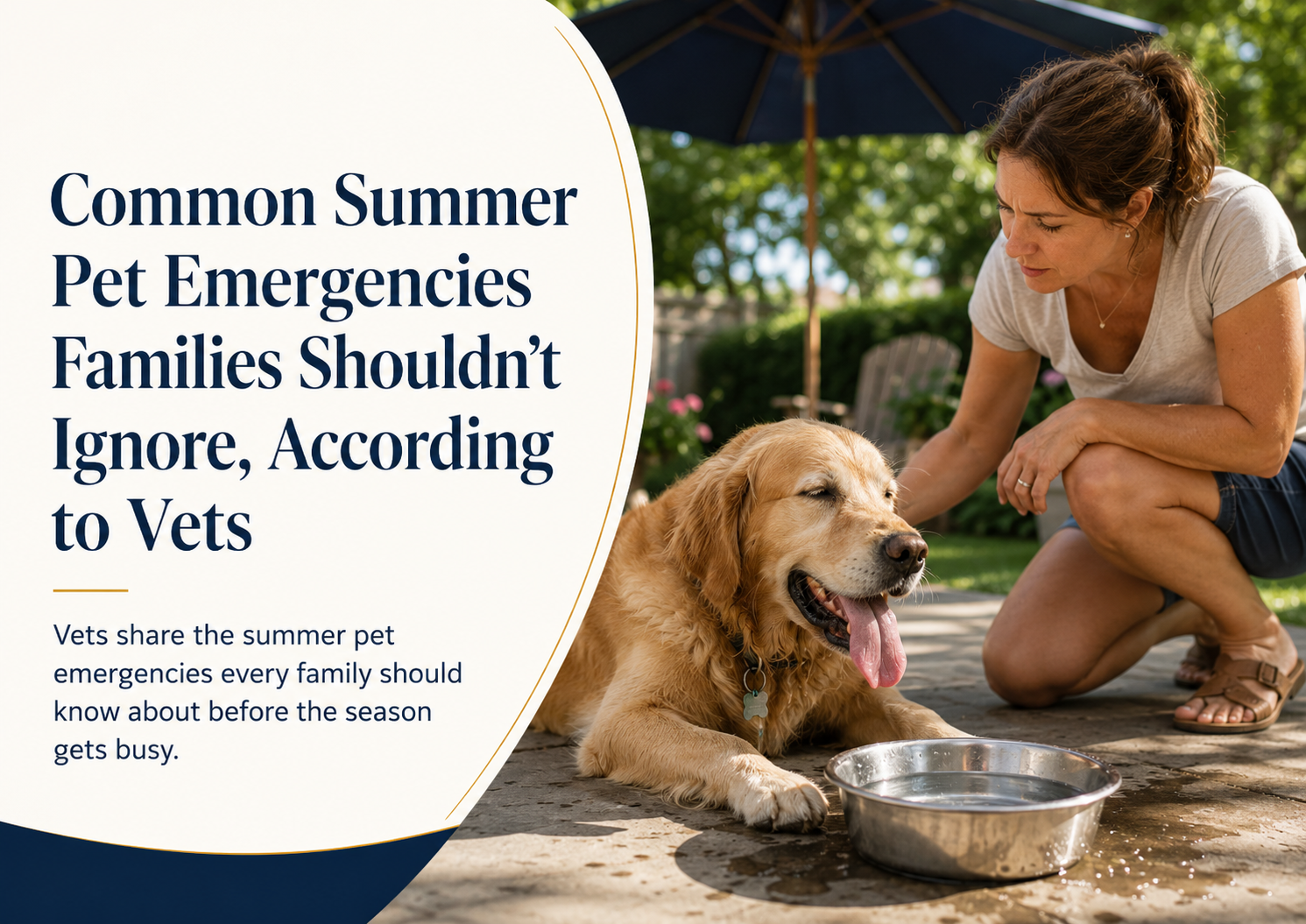
Summer is wonderful. The kids are off school, you’re spending more time outside, and your dog is absolutely living their best life. And then at some point, something shifts.
Your pup starts panting in a way that doesn’t feel right. Your cat hides somewhere strange and won’t come out. You Google something and immediately wish you hadn’t.
The thing about summer pet emergencies is that most of them sneak up quietly. They don’t announce themselves. One minute everything is fine; the next you’re wondering whether to call the vet or wait and see.
If you’ve ever been in that situation, you’ll know the feeling. That particular mix of worry, guilt, and desperate hope that it’s nothing serious. And if you haven’t been there yet, well, this is worth a read before summer gets properly underway.
Vets consistently report a spike in urgent visits during June, July, and August. These are the situations they see most often, and the ones that families are most likely to miss or delay acting on.
1. Heatstroke: the big one that catches people off guard
Most of us know, in a general sense, that dogs can overheat. But knowing it and truly understanding how quickly it can happen are two different things.
Veterinary insurance data cited by dvm360 shows heatstroke-related claims are nearly 300% higher in summer than in any other season, with July consistently recording the highest volume.
Dogs cool themselves almost entirely through panting. When that stops being enough, their body temperature can shoot past the danger threshold of around 104°F (40°C) rapidly.
Flat-faced breeds (bulldogs, pugs, French bulldogs, boxers) are particularly vulnerable because their airways make efficient panting harder. But this is not just a flat-faced breed problem. Any dog, in the right conditions, can overheat.
And cars are the single most dangerous environment. According to Michigan State University’s College of Veterinary Medicine, a car interior can reach 99°F on a 70°F day in just 20 minutes. Cracked windows make almost no difference.
Signs to watch for
- Excessive panting that does not settle after moving somewhere cool
- Heavy drooling, red or very pale gums
- Weakness, wobbly movement, confusion, or unusual stillness
- Vomiting, bloody diarrhoea, or collapse
What to do right now
- Get them out of the heat and into air conditioning or deep shade immediately
- Apply cool (not ice cold) water to their groin, armpits, and neck. A wet towel with a fan helps. Do not use ice or submerge them in cold water
- Offer small sips of cool water if they are conscious and can swallow, but do not force it
- Head to the vet without waiting to see if they improve. Heatstroke needs IV fluids and monitoring, not just cooling at home
For families in Denver, leading veterinary care Denver locals trust at Sploot Veterinary Care offers same-day urgent appointments with extended hours throughout summer and in-house diagnostics for heat-related presentations.
Worth saving the number before you need it.
2. Paw pad burns from hot pavements
This one gets a lot of people, especially in the first proper heatwave of the year when everyone is keen to get out and everyone forgets to think about the ground temperature.
According to the AAHA, asphalt and concrete can run 40 to 60 degrees hotter than the air temperature around them. On an 85°F (29°C) day, the pavement surface can reach 135°F (57°C). That is hot enough to cause burns on paw pads within around a minute of contact. The MSD Veterinary Manual confirms dogs and cats can sustain third-degree burns from hot pavement and sand.
The tricky part: dogs often keep going despite the discomfort. You may not realise anything has happened until you are back home and they start licking their feet obsessively, or you notice they are reluctant to walk the next morning.
Signs something is wrong
- Limping, or lifting paws off the ground during a walk
- Redness, blistering, or visibly damaged pad surfaces
- Licking or chewing at the paws after being outside
- Whimpering when the foot is touched
What to do
- Get them off the hot surface. Rinse the paws with cool (not cold) water.
- Do not apply ice. Cover loosely to prevent licking during transport.
- Call your vet. Burned pads need assessment, pain management, and often bandaging to prevent infection.
- Going forward: walk early morning or after 7 pm in hot weather, and always test the pavement with your own hand before you set off.
3. Ear infections after swimming (yes, dogs get swimmer’s ear too)
If your dog loves a paddle, a swim at the beach, or even just a splash in the paddling pool with the kids, they are at increased risk of ear infections during summer. Water that gets trapped in the ear canal creates exactly the warm, moist environment that bacteria and yeast love. It is essentially swimmer’s ear, the same thing that affects kids after a week at the pool.
According to the Merck Veterinary Manual, dogs that swim frequently benefit from veterinarian-recommended drying agents applied after water exposure to keep the ear canal from becoming a bacterial breeding ground.
On what to look for in ear cleaning and care products, Dr. Jessica Apted, Lead Veterinarian and Regional Medical Director of Sploot Veterinary Care, told Business Insider:
| “Apted recommends looking for drying agents (lactic acid, salicylic acid), mild antiseptics (chlorhexidine, chloroxylenol), and pH-balancing ingredients (citric acid) that discourage the growth of bacteria and yeast.”— Dr. Jessica Apted, Lead Veterinarian and Regional Medical Director, Sploot Veterinary Care, as told to Business Insider |
Dr. Apted also noted that for wax breakdown, pet parents can look for cerumenolytics such as docusate sodium, propylene glycol, and squalene, which help loosen buildup in the ear canal and support proper cleaning. As always, check with your own vet before introducing any new product.
Ear infections are one of those things that seem minor until they are not. A mildly irritated ear can become quite painful quickly, especially in dogs with floppy ears or narrow canals who already trap more moisture than average.
Signs your dog’s ears need a vet check
- Head shaking repeatedly or scratching at one or both ears
- An unpleasant smell coming from the ear
- Redness, swelling, or discharge visible inside the ear canal
- Tilting the head to one side, or sensitivity when the ear is touched
- If signs have been present for more than a day, same-day evaluation is usually the right call
4. BBQ foods and summer toxins (the list is longer than you think)
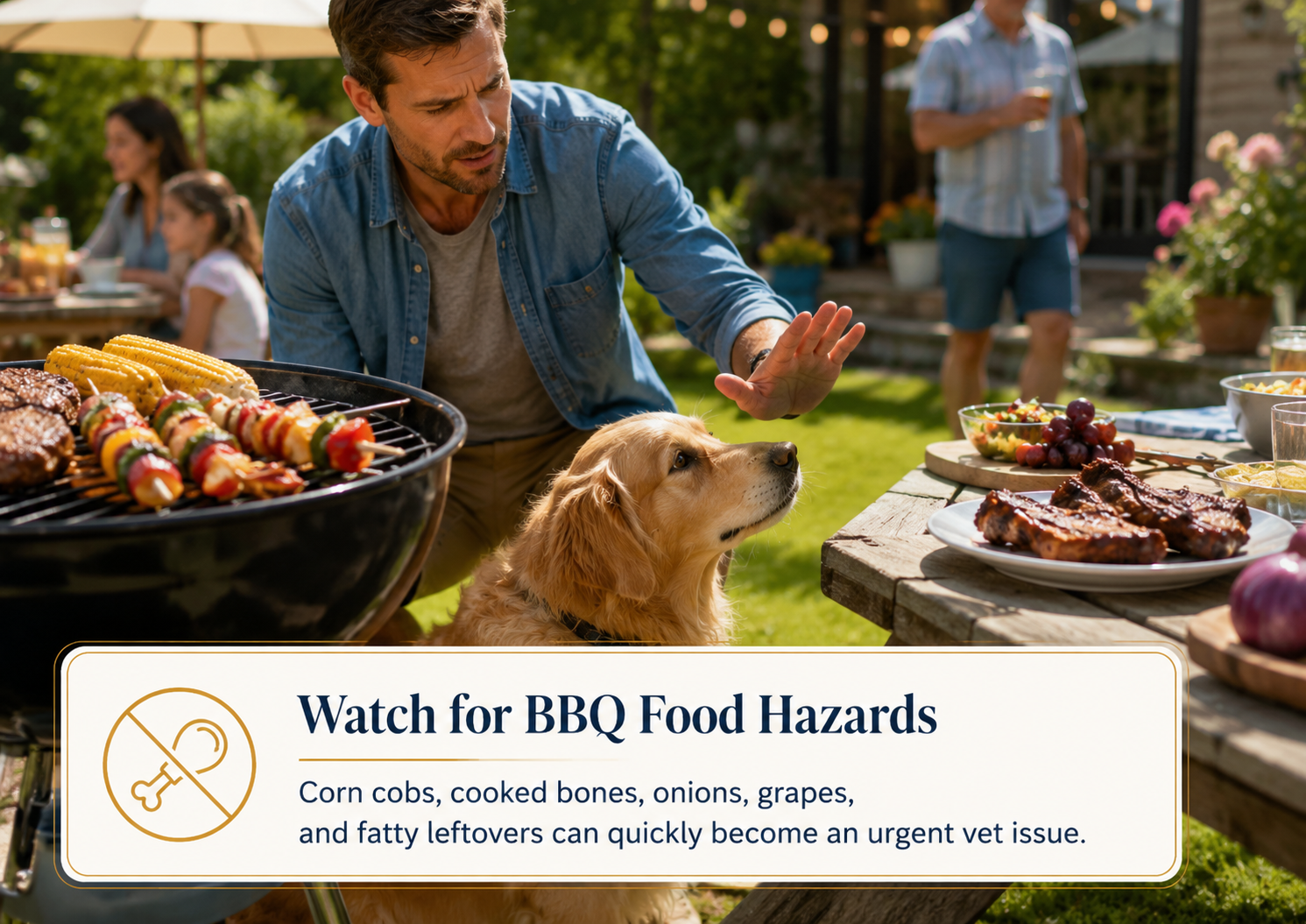
Summer gatherings are one of the most common settings for accidental pet ingestion, and the reason is pretty obvious: there is food everywhere, it smells incredible, and supervision naturally dips when you are hosting. One second your dog is next to you, the next they have quietly helped themselves to something off the table.
The ASPCA Animal Poison Control Center handled more than 334,000 toxic exposure cases in 2025. Summer food hazards are consistently among the top reasons for urgent calls. The AVMA’s Michael San Filippo put it plainly: vomiting and diarrhoea from food meant for people are both common issues pets face during barbecue season, when food items from the grill may be most accessible to them.
Here is the list that is worth actually knowing:
- Corn cobs: do not digest and are one of the leading causes of intestinal obstruction in dogs during summer. Even a dog who eats cobs regularly can get an obstruction. It is not worth the risk.
- Cooked bones and kebab skewers: cooked bones splinter. Those splinters can cause lacerations in the throat, stomach, or intestines. Not dramatic at the time, genuinely dangerous.
- Xylitol: the artificial sweetener used in some sugar-free condiments, certain peanut butters, chewing gum, and baked goods. Even small amounts can cause a severe drop in blood sugar in dogs and, at higher doses, acute liver failure.
- Grapes and raisins: associated with acute kidney failure in dogs. The safe amount is unknown, which means no amount is considered safe.
- Onions and garlic: toxic to both dogs and cats. Can cause red blood cell damage even in small quantities. Marinades, dips, and sauces count.
- Alcohol: unattended glasses at garden parties are a consistent summer hazard. Even small amounts can cause disorientation, vomiting, and respiratory problems in pets.
- Fatty foods: a plate of leftover sausages or buttered corn can trigger pancreatitis, which is painful, sometimes serious, and very much a vet visit.
If you think your pet has eaten something toxic: call your vet or the ASPCA Animal Poison Control Center at (888) 426-4435 (a consultation fee may apply). Do not induce vomiting unless a vet tells you to. Bring the packaging if you can.
5. Insect stings and allergic reactions
Dogs discover bees and wasps mostly by doing what dogs do: investigating things with their noses and paws. Most stings cause a bit of local swelling, some discomfort, and a very sorry expression. Most resolve on their own.
But some pets have allergic reactions, and a small number experience anaphylaxis, which is fast-moving and requires emergency treatment. According to the MSD Veterinary Manual, insect stings increase significantly during summer as pets spend more time in gardens and parks where insects feed and nest.
The key is knowing the difference between a normal sting reaction and one that needs veterinary care urgently.
Normal reaction: keep an eye on it
- Local swelling at the sting site (paw, muzzle, face)
- Pawing at the face
- Mild, brief vomiting that settles quickly
Go to the vet now
- Rapid or widespread swelling, especially around the face, throat, or eyes
- Hives or welts visible through the coat
- Vomiting with lethargy or weakness
- Difficulty breathing, pale gums, collapse
- A sting inside the mouth or throat
Pets with no previous allergic history can still develop anaphylaxis. Do not wait to see if it passes if any of the above signs are present.
6. Fireworks stress, escapes, and the injuries that follow
If you have a dog who is scared of fireworks, you already know what this looks like. The shaking. The panting. The hiding in whatever corner they have decided is their safe place. And then the mad bolt for the door the moment someone opens it.
The ASPCA consistently flags fireworks as one of the major seasonal stressors for companion animals, and the period around Independence Day or Guy Fawkes Night (depending on which side of the Atlantic you are on) produces a significant spike in lost pet reports. Pets that escape during fireworks events can sustain injuries from traffic, falls, fencing, or encounters with other animals.
Before the fireworks start
- Check your pet’s microchip registration is current and the contact details are active
- Make sure ID tags are legible and attached securely
- Inspect fencing for gaps. Check gate latches.
- Keep pets indoors during peak fireworks periods, ideally in an interior room with curtains closed and some white noise or music on
- Talk to your vet ahead of time if your pet has significant anxiety. There are options, from situational calming support to medication, and they are easier to arrange before the night than during it
As Dr. Jessica Apted, Regional Medical Director of Sploot Veterinary Care, has noted in other veterinary contexts, the investment in addressing behavioural issues early, whether through professional guidance or training, consistently pays off compared to managing untreated anxiety over years.
7. Water safety and the thing most people have never heard of
Most dogs love water. Some are genuinely built for it. But even a confident swimmer can get into difficulty, and there is something called secondary drowning that most pet owners do not know about until they need to.
Secondary drowning happens when water aspirated during a swimming incident causes delayed respiratory distress, sometimes hours later, as fluid gradually accumulates in the lungs. A dog that had a scary moment in the pool, seemed fine, and then settled down for the evening can still develop breathing difficulties later that night. If your pet inhaled water during a swimming incident, veterinary evaluation is sensible even if they appear to have recovered.
Practical summer water safety
- Never leave pets unsupervised near pools, ponds, or open water
- Make sure pool exits are accessible to your pet. Dogs that fall into pools without steps or ramps can exhaust themselves trying to get out of smooth-sided walls
- Rinse and dry ears thoroughly after swimming, including any chlorinated or salt water
- Consider a properly fitted canine life jacket for boating or open-water swimming
- If your dog inhaled water or was clearly struggling, call your vet even if they seem fine
The through-line across all of these
None of these summer emergencies are particularly rare, and almost none of them announce themselves obviously. They tend to start small. A bit of extra panting. Some head shaking. One vomit. And the temptation, always, is to wait and see.
Vets will tell you that the calls and visits that go smoothly are nearly always the ones where owners acted on their instincts early. The situations that become complicated are usually the ones where someone waited half a day hoping things would settle.
If something feels off, it probably is. That is the one piece of knowledge worth holding onto all summer.
If you want to understand more about what actually happens when you arrive at the vet in an unplanned situation, this piece on what to know before your first emergency vet visit covers exactly that.