Image Credit: Unsplash
Designing a room for your child is a wonderful project, but it can also feel like a balancing act. You want to create a space that sparks joy and imagination, but you also need it to be practical, organised and safe, especially when looking for small living storage solutions.
How do you design a room that’s perfect for playtime but also encourages quiet time and peaceful sleep? The key is to blend playful elements with smart, functional design, creating a space that can evolve as your child grows.
Smart Storage Solutions
Let’s start with the biggest challenge for most parents: the seemingly endless tide of toys, books and clothes. A cluttered room can feel chaotic and overwhelming for both you and your child. Effective storage is the foundation of a practical and playful room. The goal is to make it easy for your child to find what they need and, crucially, to help tidy up afterwards.
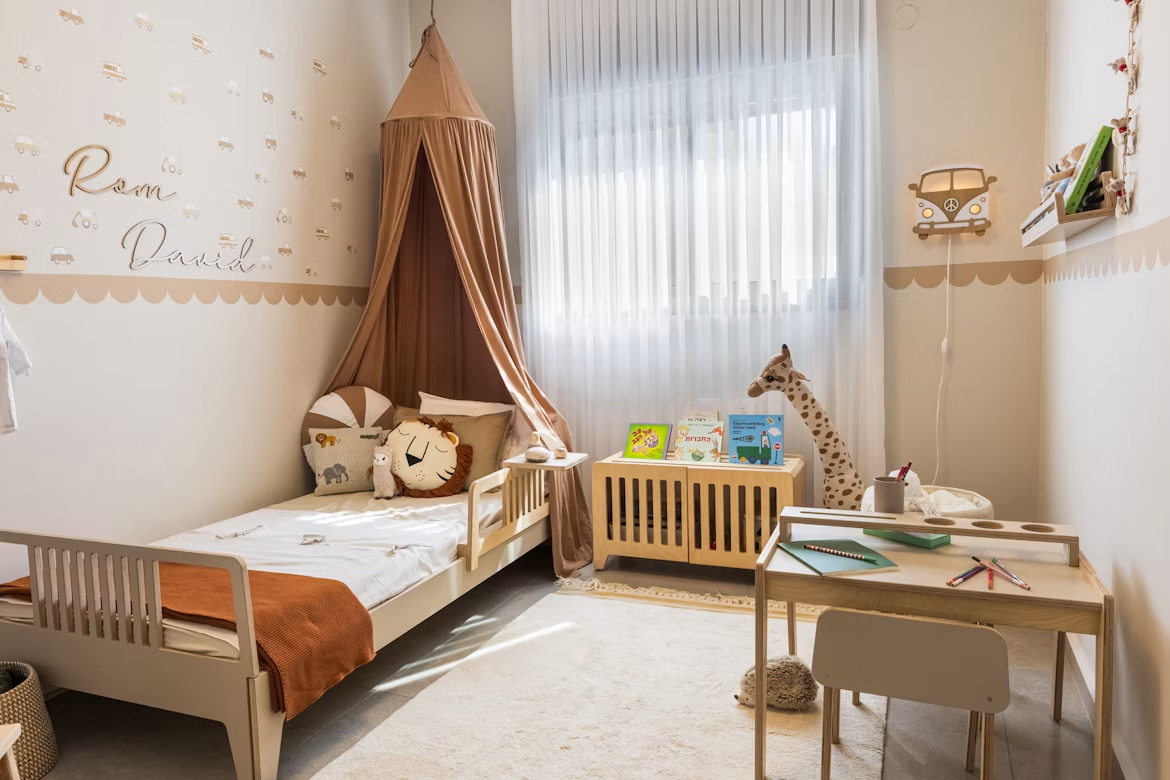
Think vertically. Tall, narrow bookshelves or wall-mounted cube units make use of space that is often wasted, drawing the eye upwards and making the room feel larger. For younger children, ensure storage is at their level. Low-level drawers, open tubs and baskets empower them to access their own toys and books, fostering a sense of independence. Consider multi-functional furniture, such as beds with built-in drawers underneath or a toy box that doubles as a bench. This is one of the best ways to plan a children’s room that feels spacious.
Organise items into categories. Use clear plastic bins for things like building blocks or art supplies so your child can see what’s inside without tipping everything out. Fabric baskets are great for soft toys and can add a pop of colour to the room. A simple labelling system, perhaps with pictures for pre-readers, can turn tidying up into a fun matching game.
Encouraging Creativity and Play
A child’s room should be a launchpad for their imagination. Creating dedicated zones for different activities helps you help them focus their play and keep creative messes contained. You don’t need a huge room to do this; a clever arrangement is all it takes. These fun and functional design ideas show that even small spaces can be cleverly zoned.
Carve out a cosy reading nook with a soft rug, a few big cushions or a beanbag chair. Install a small, low-level shelf nearby to display a rotating selection of their favourite books. This creates an inviting space that encourages quiet time and a love for reading.
A chalkboard wall or a large corkboard is another fantastic addition, giving them a dedicated canvas to display their masterpieces. A rolling trolley can keep crayons, paper and paints organised and accessible.
Adding Themed Decor and Light
Creating a themed room doesn’t mean you have to buy a matching set of everything. Often, the most stylish and enduring rooms use a theme as a gentle guide rather than a strict rule. You can evoke a jungle, space or fairytale adventure with a few carefully chosen accessories. Bedding, a statement rug, wall decals and art are all brilliant ways to bring a theme to life without committing to something your child might outgrow in a year.
Lighting plays a huge role in setting the mood. A room needs good overhead lighting for general play, but it’s also important to have softer options. A desk lamp provides focused task lighting for homework or crafts. For a modern and playful touch, a piece of boldhaus LED wall art can serve as both a statement decoration and a gentle source of ambient light, perfect for creating a cosy atmosphere at bedtime.
A comforting night light can also help little ones who are nervous about the dark, ensuring the room feels safe and secure all night long.
Safety First, Always
Above all else, a child’s room must be a safe environment. As you plan the layout and choose furniture, keep safety at the forefront of your mind. Young children are naturally curious explorers, so it’s our job to ensure their surroundings are secure.
- Anchor Furniture: Any heavy or tall pieces of furniture, like chests of drawers, wardrobes and bookshelves, should be securely anchored to the wall to prevent them from tipping over.
- Window Safety: Use cordless blinds or curtains. If you have blinds with cords, make sure they are tied up high and out of reach using a cleat or safety device.
- Electrical Safety: Cover any unused electrical outlets with safety plugs. Keep cables and cords from lamps or other devices tidy and tucked away so they don’t become a trip or pull hazard.
- Choose Non-Toxic Materials: When painting or buying new furniture, look for products with low or zero volatile organic compounds (VOCs) to ensure better air quality.
- Check Your Space: Regularly get down on your hands and knees to see the room from a child’s perspective. This can help you spot potential hazards you might otherwise miss.
Designing for Growth and Change
Children grow and change at a dizzying pace, and their interests follow suit. The dinosaur-obsessed toddler may become a space-fascinated seven-year-old in the blink of an eye. Designing a room that can adapt is not only practical but also more budget-friendly in the long run.
The secret is to invest in neutral, quality core pieces of furniture, the bed, wardrobe and chest of drawers. Choose simple designs in versatile colours like white, grey or a natural wood finish. These will provide a timeless backdrop that can be adapted to any theme or colour scheme.
Then, bring in personality through accessories that are easy and inexpensive to swap out. A new duvet cover, different coloured storage boxes, updated artwork or a new rug can completely transform the feel of the room without a major overhaul. This allows your child to have input into their space and express their changing personality. Consider adaptable furniture, like a cot that converts into a toddler bed or a desk with adjustable height, to get more years of use out of your investment.
The goal is to create a room that is a true reflection of your child, a safe, comforting and inspiring space where they can sleep, play and dream.