Image credit Unsplash
Living with a busy family in a small space often feels like a constant game of Tetris with your furniture and belongings, but many storage solutions can help. Every square foot is precious, and finding room for toys, work-from-home setups, and just a bit of personal space can be a real challenge. But a smaller home doesn’t have to feel cramped. With some smart layout strategies and modern decor tricks, you can create a home that feels open, organized, and perfectly suited for your family’s needs.
Go Vertical: Making the Most of Your Wall Space
When you don’t have much floor space, the only way to go is up! Your walls are often among the most underused spaces in your home. Think beyond just hanging a few pictures and consider how they can actually be useful. Floating shelves, for instance, give you storage for books, plants, and decorative items without taking up any floor space. Tall, narrow bookcases also help by drawing the eye upward, making the room feel taller.
This “go vertical” strategy works especially well for your entertainment area. A bulky media console can really hog a lot of your living room. A simple solution is to get your television off the furniture and onto the wall. A TV mount instantly frees up floor space, making the room feel larger and more streamlined. You can then place a much slimmer console or even just a few floating shelves underneath for your other devices.
Choose Furniture That Does Double Duty
In a small home, every piece of furniture should really earn its keep. Choosing items that do more than one thing is key to making the most of your layout. A storage ottoman is a classic example: it’s a footrest, extra seating, and a hidden spot to stash blankets or toys. A lift-top coffee table can transform into a dining surface or a comfy desk for those work-from-home days.
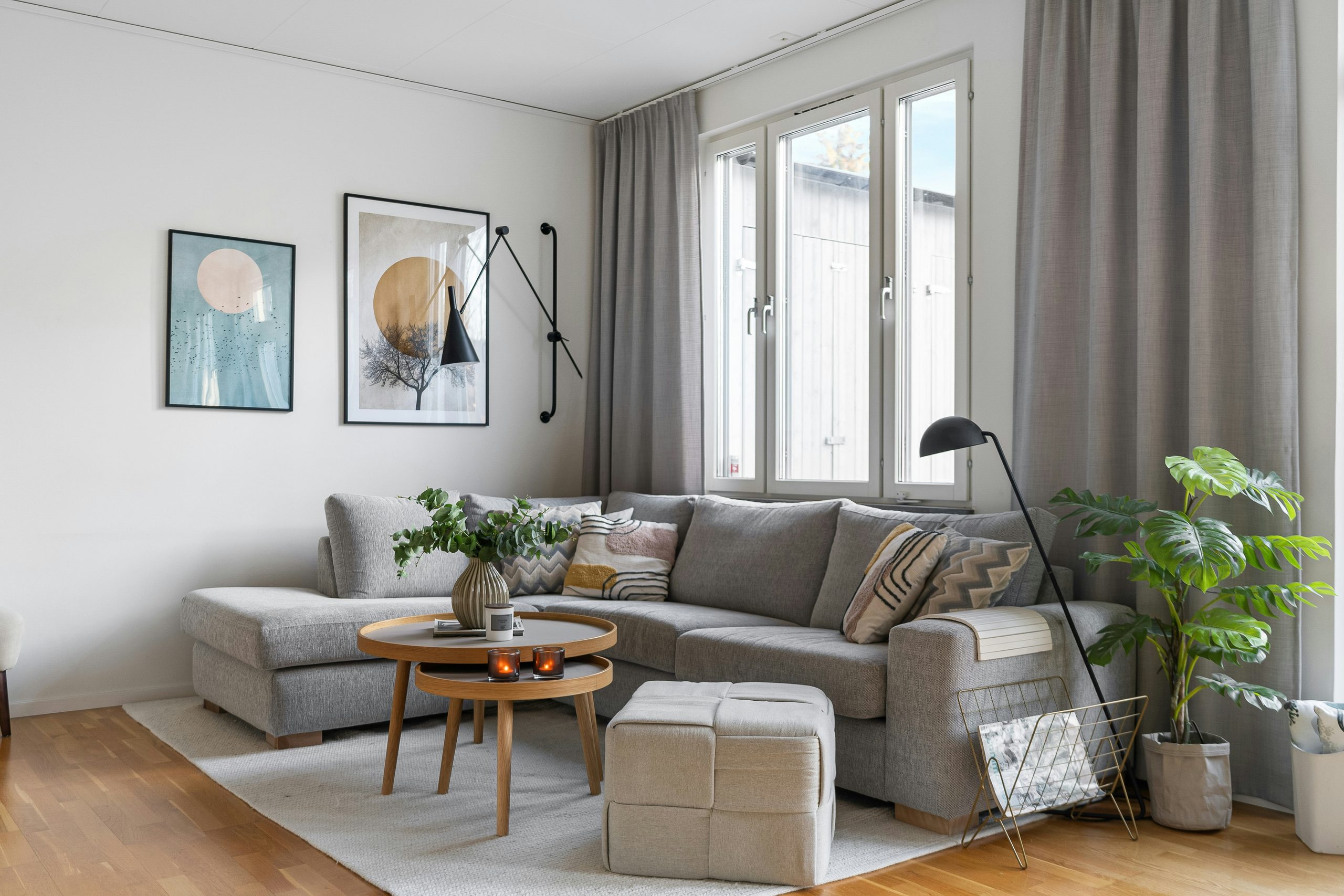
When you’re shopping for sofas, consider a sectional with a chaise and built-in storage underneath. If you have guests over often, a stylish sofa bed is a much better option than a bulky guest bed that just sits there most of the time. Even your dining table can be super flexible. Look for an expandable table that stays small for daily family meals but grows to fit guests for special occasions. The goal is to have a flexible space that adapts to your needs, helping you create a cozy common area that works for everyone.
Create Zones for Different Activities
An open-plan living area can quickly become a bit chaotic when it has to be a playroom, office, and relaxation spot all at once. Creating visual “zones” can bring order and purpose to the space, even without walls. One of the easiest ways to do this is with area rugs. A large rug can define the main seating area, while a smaller, durable rug can mark out a dedicated play zone for the kids.
You can also use furniture to create these divisions. Placing a sofa with its back to another area can create a subtle barrier. A slim console table behind the sofa can further define the “entryway” from the “living room.” Even a strategically placed armchair or a tall plant can help signal a shift from one zone to another. This approach helps everyone in the family understand where different activities happen, which can help contain the mess and make the room feel more organized.
Master the Art of Smart Storage
Clutter is the number one enemy of a small space. For busy families, “stuff” just seems to multiply on its own. The solution isn’t just to declutter constantly, but to have smart, accessible storage systems in place. Use the hidden space you already have, like the area under beds and sofas. Low-profile rolling bins are perfect for storing out-of-season clothes, extra bedding, or toys.
Embrace baskets and stylish bins. Leaving toys out can make a room feel messy, but putting them away somewhere kids can’t access isn’t practical. Large, attractive woven baskets or fabric bins let kids easily grab and put away their own toys while keeping the space tidy. Think about your vertical storage space, too. Wall-mounted cubbies in a playroom or entryway can hold shoes, backpacks, and sports gear, keeping them off the floor.
Let There Be Light (and Mirrors)
How you use light and color can dramatically change how big a room feels. Dark, heavy decor can make a small room feel like a cave. Instead, choose a light, airy color palette. Whites, soft grays, and pale blues on the walls can make a space feel more open and expansive.
Mirrors are another powerful tool. A large mirror on a wall opposite a window will reflect natural light, making the room brighter and creating the illusion of depth. You don’t have to stop at one. Grouping several smaller mirrors can create an interesting focal point and help open up the space. Finally, let in as much natural light as possible. Replace heavy drapes with sheer curtains or light-filtering blinds that provide privacy without blocking the sun. You can find plenty of visual inspiration from looking at how others have decorated their small living rooms to feel both stylish and welcoming.
Living in a smaller home with your family is an opportunity to be creative and intentional with your space. It encourages you to focus on what you truly need and to design a home that is functional, comfortable, and full of life.