The purchase question for a robot vacuum with a mop is usually not “does it work?” It is closer to “will the mop actually lift kitchen film, paw prints, and grout dirt, or just leave a damp path behind?” That difference shows up quickly on hard floors. A kitchen tile may look clean but still feel sticky under bare feet. A hallway can collect fine dust that needs only a light, damp pass. Grout, older hardwood, and laminate seams create their own limits.
The answer depends less on one headline spec and more on the mix of water supply, mop pressure, floor material, and how dirty the floor is before the run starts. A larger tank helps only if the mop stays clean enough to finish the space. A stronger mop helps only if the floor can tolerate the water and contact pressure.
This article looks at tank size and coverage, light dust versus grease and pet marks, mop matching for tile, grout, hardwood, stone, and laminate, plus pad wear and cleaning-solution limits.
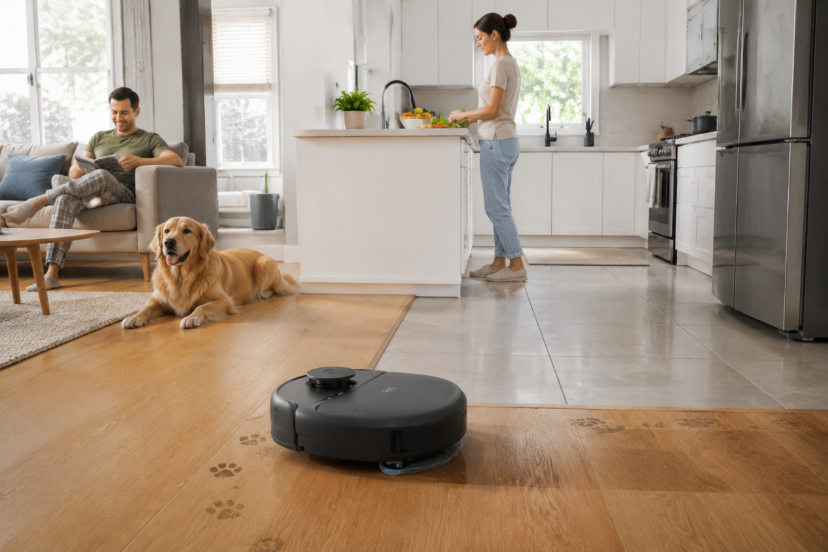
A family with a robot vacuum mop cleaning floors.
Table of Contents
- Water tank size and what it realistically covers per run
- What a robot mop can handle and where it falls short
- How to match mop type to floor material
- How mop pads and rollers wear over time
- Cleaning solutions and what they do to sensors and floors
- Conclusion
Water tank size and what it realistically covers per run
Smaller robot mops carry a built-in reservoir, usually between 200 and 300 ml, that drips water through a flat pad as the machine moves. For a studio or a single tiled room, that is enough. For a home with a kitchen, hallway, and a couple of hardwood floor bedrooms, the tank runs dry before the job is done.
The other configuration relies on a base station with its own water supply. Some designs refill the robot between passes. Others separate clean and dirty water into different tanks throughout the run, so the mop draws from uncontaminated water at hour two instead of the same batch it started with.
What most users do not notice until the floor feels slightly tacky is that the water is not being refreshed mid-run. The robot that started clean in the kitchen is still using that same water by the time it reaches the back bedroom. The last portion of the run leaves a faint film from whatever was lifted earlier. The mop was working as intended. It just ran out of clean water before it ran out of floor.
What a robot mop can handle and where it falls short
Dust and fine particles on hardwood or tile are the most comfortable surfaces for these machines. Run the robot on a regular schedule before the buildup gets thick, and a damp mop pass leaves the floor visibly cleaner. Most models with a working mop system handle that well.
Grease is different. Kitchen splatter, shoe grime, anything that bonds to the tile surface: a flat mop pad dragged across it spreads the mess more than it lifts it. That is not a settings problem or a timing issue. Flat pads under passive water drip are not designed for surface adhesion. A rolling mop with active pressure and rotation does more here, though even a good rolling system is not solving grease that has been sitting on tile for several days. Fresh splatter responds better than old buildup.
Paw prints depend on timing. Wet paws tracked in right before the robot runs usually come up on the first pass. Dried mud from a walk an hour ago is more like the grease scenario: the mop can soften it, but a single pass may not lift it cleanly without pre-wetting the spot first.
How to match mop type to floor material
The easiest way to think about mopping performance is to match the mop style to what the surface will tolerate and what it tends to hold onto.
| Floor type | What robot mopping is good for | Where it struggles | Practical setup choice |
| Tile (ceramic/porcelain) | Routine dust, light marks | Grout channels; old grout stains | Flat pad for upkeep; rolling mop with pressure helps contact, but stains still need manual scrubbing |
| Hardwood | Light residue when finish is intact | Water sitting; older worn finish; gaps between boards | Keep water output low; avoid stopping in one spot; treat older floors as higher-risk |
| Stone/polished marble | Dust removal plus gentle damp pass | Micro-scratches from grit dragged under the mop | Vacuum first, then mop; keep grit off the mop material |
| Vinyl plank/laminate | Light mopping when seams are tight | Seam swelling over months if water output is high | Use low to medium water; confirm waterproof rating before daily mopping |
The selection logic is simple. If your home is mostly tile with frequent kitchen marks, a rolling mop with pressure is usually the better fit than a flat pad. If you have older hardwood or seam-sensitive laminate, prioritize controlled water output and consistency over aggressive scrubbing. For stone, the “vacuum first, mop second” sequence matters more than any mop marketing, because grit is what causes long-term damage. Pick the mop type to match the surface, then set the water output low enough that the robot can run often without creating a moisture problem.
How mop pads and rollers wear over time
A mop pad or roller has a useful life. Most owners stretch it past that point, usually because the signal is easy to miss. The mop starts leaving faint streaks where it used to come up clean, or it misses debris it handled without issue three months ago. The pad looks intact, but the texture has worn down, and the absorbency has dropped.
Flat pads tend to hold up for three to six months under regular use. A larger home running the robot daily through a heavy shedding season goes through them faster than that window suggests. Rolling mops on self-cleaning systems wear on a different schedule. The frequent washing cycles keep them effective longer in theory, but those same cycles add mechanical stress to the roller material. The lifespan is not neatly predictable.
One example of a roller-mop setup is the eufy Robot Vacuum Omni C28. Its HydroJet™ roller mop cleans itself during the run, which helps reduce the problem of carrying kitchen residue into the next room. Its 270 RPM rotation and 1 kg of downward pressure matter most on fresh tile marks and light sticky residue. The station also washes the mop and uses hot-air drying, so a damp roller is less likely to sit and develop odor between runs.
The tradeoff is that rollers still wear. When streaks start showing up consistently, or the roller keeps smelling despite station washing, that is usually the point to replace it rather than keep tuning settings.
Checking takes less than a minute. If the texture is worn smooth or the roller smells despite the station washing it, the replacement is already overdue. Running on a worn mop means the machine keeps running its schedule while depositing a thin film instead of lifting anything.
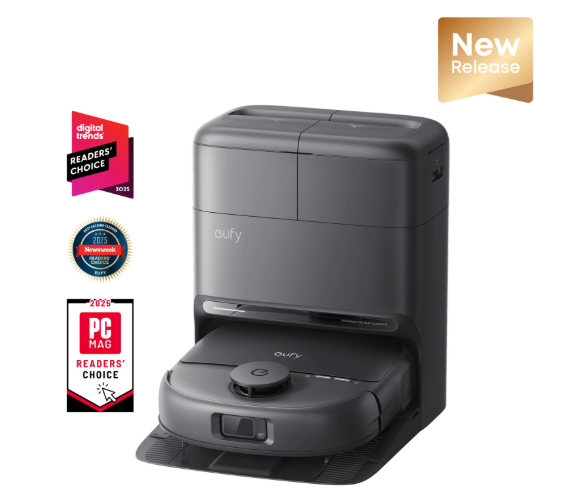
eufy Robot Vacuum Omni C28[Text Wrapping Break]
Cleaning solutions and what they do to sensors and floors
Adding cleaning solution to the water tank is usually fine, but the dilution ratio matters more than most instructions make clear. Running a concentrated cleaner rather than a diluted solution leaves residue on the floor that is harder to rinse than the original dirt. Over weeks, it also builds up in the mop system and station hardware.
Sensors are a slower problem. Floor-proximity and cliff-detection sensors sit low on the robot body, and a solution that mists or films onto the housing during daily cleaning gradually affects how reliably they read the surface. Misjudging a stair edge or behaving erratically near a drop-off tends to appear months into a cleaning-solution routine, not right away. Before treating it as a navigation fault, cleaning the sensor housing manually is worth trying first.
Plain water handles everyday dust on most floors well enough. Cleaning solution earns its place in kitchen grease and pet odor situations where water alone does not lift the residue. Running it on the kitchen zone while the rest of the house gets plain water uses the supply more slowly and keeps buildup out of areas where it is not doing much. The eufy robot vacuum and mop collection covers the current model range with different mopping systems, water delivery configurations, and station setups, which makes for a clearer side-by-side comparison than reading individual spec sheets.
Conclusion
Robot mops work well on most hard floors for regular dust and light surface grime. Old stains in grout, kitchen grease that has had time to set, and dried-on mud all need manual prep regardless of what the machine is rated for. The spec sheet does not change that.
The more useful question before buying is not the maximum square footage the tank covers. It is whether the mop system keeps itself clean mid-run, and whether the water output level suits the floor type. A clean mop running on the right setting covers less area and still leaves a better result than a larger-capacity machine spreading dirty water across the last third of the floor.