

I have had many a conversation with mum friends wondering whether their child may have ADHD which is why I wanted to put out this article on signs of ADHD in children to look out for. In the UK it’s thought that between 2% to 5% of school aged children have ADHD. The prevalence of ADHD in the adult population is between 3% and 4% but the majority of these individuals are undiagnosed.
What is ADHD
ADHD, also called attention-deficit disorder, is a behavioural condition, typically first diagnosed during childhood, characterized by inattention, impulsivity, and, in some cases, hyperactivity. Hyperactive/impulsive ADHD is another one of three major types of ADHD, one of which is predominant symptoms is a difficult ability to remain stationary. Some children may experience symptoms of being hyperactive, unable to pay attention, or both.
The symptoms of hyperactivity and inattention can significantly impact academic performance as well. Children with ADHD may struggle to stay focused during classes, complete assignments, or follow instructions. They may also have difficulty organizing their tasks and managing their time effectively. However, with the right support and learning strategies for ADHD students, they can overcome these challenges and excel in their academic pursuits.
ADHD can be diagnosed in very young children, but symptoms more commonly start showing up by the age of eight. Serenity offers comprehensive ADHD assessments if you are concerned about your child. There are specific sets of symptoms doctors ask about to determine whether children have ADHD; diagnosis also takes the childs age into consideration. ADHD symptoms may be mild, moderate, or severe, and may persist in adulthood.
There are many indicators of ADHD but here are some the seven most common signs of ADHD in children according to Sarah Templeton, ADHD counsellor, coach, CBT therapist and author of How Not to Murder Your ADHD Kid: Instead Learn How to Be Your Child’s Own ADHD Coach.
7 signs of ADHD in children to look out for
Hyperactivity and restlessness
Does your child struggle to sit still to watch a television programme or watch a film at the cinema? Are they restless and always want to move onto the next thing? Do they seem to have lots more energy than other kids their age?
This is a very common sign that of either a Hyperactive/Impulsive or a Combined ADHD child.
Hyperactivity can also be in the brain. So, children with Inattentive ADHD may not appear so outwardly restless, but their brains can be very busy inside.
Distraction
Does your child struggle to concentrate and focus? This can show up from quite an early age. Whatever activity they are doing, do they tend to get distracted? Does their mind wander?
The cause of their distraction is actually their brain needing more stimulation. ADHD brains lack dopamine, so are constantly looking for something more exciting and stimulating to give it the adrenaline boost it is looking for.

Diagnosed with other conditions
As your child gets a little bit older, from five onwards, if they diagnosed with any of the ADHD comorbidities, dig deeper. These coexisting conditions can include dyslexia, dyspraxia, dysgraphia, dyscalculia and a whole host of other conditions that often exist alongside ADHD. Some of these are also physical coexisting conditions such as irritable bowel syndrome. So, if you have a child who has tummy trouble and irregular toilet habits, this could be an early sign of IBS which can develop at any time.
Struggle to pay attention
Do you notice that your child often doesn’t pay attention to what they are doing? For example, when they pick something up, do they often miss the item and instead drop it on the floor or knock it over?
Inattention can show up in many ways. They may not notice that they have put on different coloured socks or odd shoes or have totally forgotten to put their school jumper on. They may not notice that they have missed a step and fallen down the stairs. Not paying attention may mean they get bruises and cuts more than other children and you might find yourself sitting in A&E more often than other parents.
Poor memory
Does your child forget things very easily? For example, if you ask them to go upstairs and bring down their washing, do they arrive 15 minutes later having completely forgotten what you asked them? Do they forget things on a regular basis like what they need to take to school, what they need to bring home or what the teacher set them for their homework?
Having a poor short-term memory is a sign of ADHD and there is a very interesting reason for this. For a thought to be stored as a memory, it has to be thought for so many split seconds – and an ADHD brain rarely thinks a thought long enough for it to be stored as a memory. Interestingly, their long-term memory is usually perfectly good.
Problem with authority
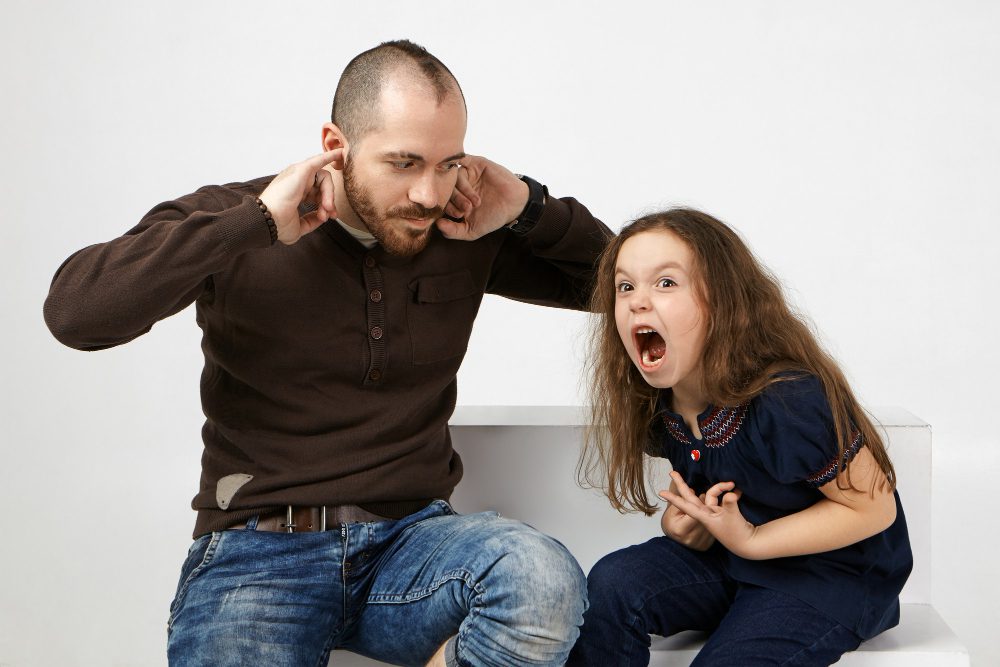
Does your child have a problem with any authority? Do they not like being told what to do? Do they challenge you whenever you ask them to do anything?
ADHD brains tend to think they know best and want everything their own way. So, if you find your child, often from a very young age, seems to have an extremely strong opinion and disagrees with you a lot, this is another ADHD indicator. It can be difficult to believe, but this is actually how an ADHD brain is wired. It does not like authority, it likes to push boundaries, it does not like being told what to do or how to do it. So sometimes children, even from the age of two or three, will be quite adamant that they know best, and will want do do things their own way. They also don’t shy away from an argument, will always want to know why and always want to have the last word!
Struggling to revise
Do you have a child who wants to revise and wants to do well in exams and tests but seems to really struggle to sit and look at text and retain information? Revision can be torture for ADHD children because their brain isn’t stimulated enough by something they have learnt before. So, any child who is constantly struggling to revise needs further investigation for ADHD.
How Not to Murder Your ADHD Kid: Instead Learn How to Be Your Child’s Own ADHD Coach is available on Amazon, priced £19.99


These are great lookouts. ADHD is one of those things that can seem like nothing more than a “problem child” if you don’t know the signs.
ADHD presents differently often in boys and girls too. This is why a lot of girls seem to go undiagnosed. Very interesting post.
I have been looking at inatentive adhd as well as it is linked with fibromyalgia which my daughter suffers with. Sadly so far not got anyone to even look at this
Really interesting to read more about the signs of ADHD as I wouldn’t have necessarily picked up on them all. I think it’s so important that people know what to look for x
It is such an important post for those that are concerned about their own children or for those that are interested in learning about the signs.
As a teacher, these are the things we look out for among the kids.
I was thinking the same thing. As a teacher, I see so many intensities of ADHD.
It really does help to be aware of what to look out for. Loving the name of the book. I think it would be useful even for those without children with ADHD.
I like that you mentioned how ADHD brains lack dopamine, so are constantly looking for something more exciting and stimulating to give it adrenaline boost it is looking for. My sister asked for my advice yesterday about the ADHD diagnosis of her son. A child ADHD counseling might be a big help for my nephew so I am thinking of recommending it to her.
So useful! I wish there was more general screening for adhd and autism at school age. The hurdle for picking up on it is just set to high at the moment and children end up with anxiety and depression before they get referred, sometimes not until they are teens or young adults. I have just written an article (Neuro revolution) about how we need to wake up and take this more seriously.