A well-fitted bra can do a lot, but it only works while it’s actually on. Take it off, and everything goes right back to how it was. For women dealing with changes in breast position after pregnancy, weight fluctuation, or simply time, that’s the frustrating part: no amount of shopping for better support actually changes what’s happening underneath, because the problem was never really about the bra in the first place.
The distinction comes down to what the procedure actually corrects. According to StatPearls, published through the NIH’s National Center for Biotechnology Information, mastopexy addresses nipple malpositioning at or below the inframammary fold, a condition known as breast ptosis, by repositioning the nipple-areolar complex higher while preserving breast volume. Weighing these options in Chicago becomes considerably clearer once this structural distinction is understood.
Here are the things a breast lift can actually fix, the changes underneath that no amount of a well-fitted bra will ever solve:
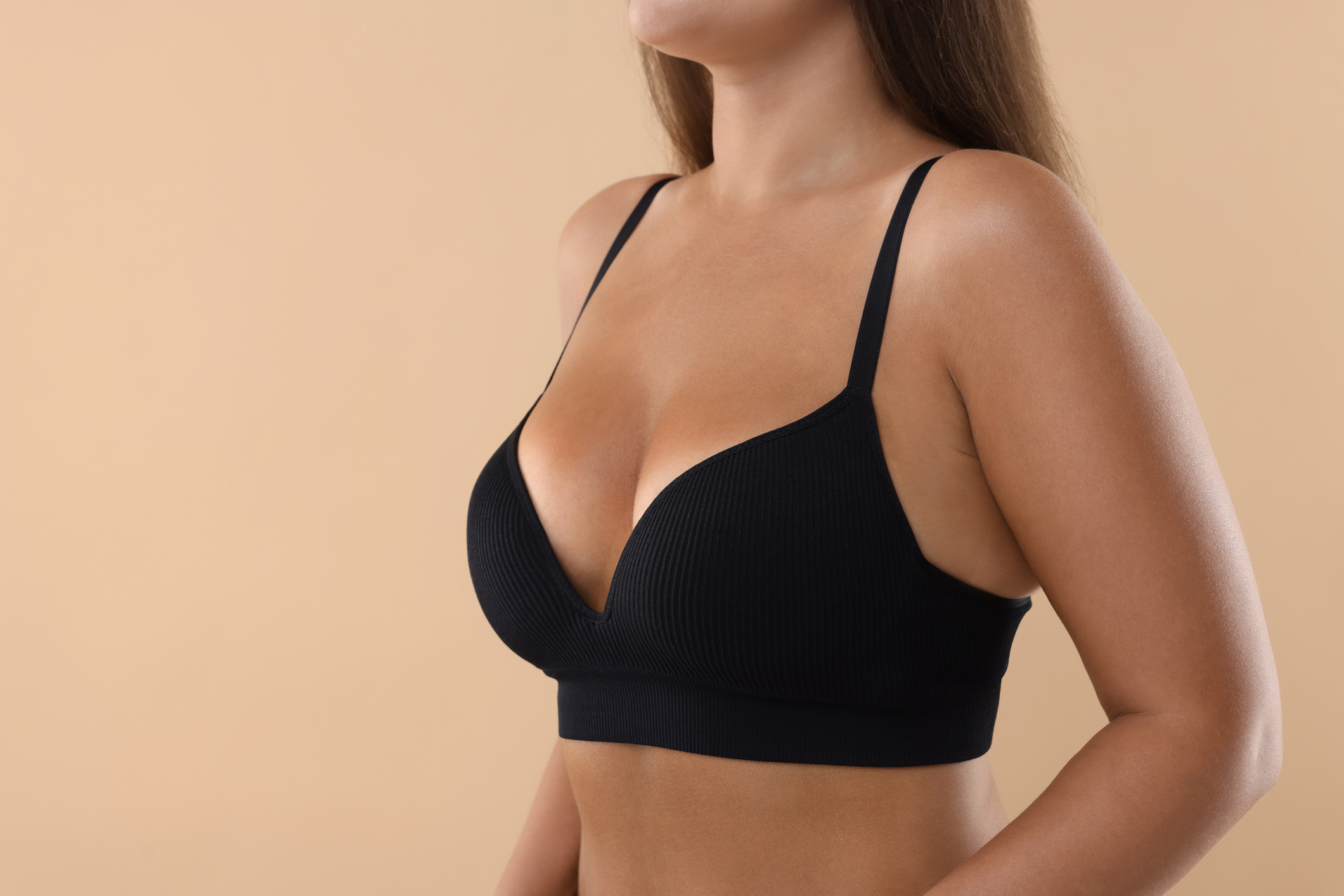
Restoring Symmetry Between Both Sides
Asymmetry between breasts is extremely common and often becomes more pronounced after pregnancy or breastfeeding. A bra can partially disguise this but cannot correct it, whereas a surgical approach can address each side individually to improve balance.
- Uneven nipple position: one side sitting noticeably higher or lower than the other, corrected independently during surgery
- Volume differences : one breast appearing fuller than the other, addressed through individualized tissue repositioning or, when appropriate, implant adjustment
- Shape discrepancies: differences in overall contour between sides that a garment can minimize visually but never actually resolve
- Areola size or position mismatches: each side treated according to its own specific anatomy rather than a single uniform approach
Because surgery treats each breast individually rather than applying a single external solution to both, it’s able to correct these differences in a way no bra ever could.
Repositioning Tissue Rather Than Temporarily Supporting It
A surgical lift removes excess skin and repositions remaining breast tissue higher on the chest wall, creating a change that persists whether or not a bra is worn. This is fundamentally different from external support, since it alters the underlying structure rather than compensating for it. A bra can lift and shape temporarily, but the moment it comes off, gravity and loose tissue return to exactly where they were before. Surgery changes that baseline entirely, which is precisely why the results remain visible in the morning before anything is put on.
It’s worth noting that results are not permanent in an absolute sense, since aging, weight changes, and gravity continue affecting tissue over time. A surgeon should discuss realistic longevity during consultation rather than implying a one-time permanent fix. Most patients can expect their results to hold well for many years, particularly with a stable weight and healthy lifestyle. Understanding this timeline upfront helps set expectations that match what surgery can genuinely deliver, rather than assuming the outcome is unchanging forever.
Correcting Nipple Position and Areola Size
The clinical definition of breast ptosis centers specifically on nipple position relative to the breast fold, something no garment can alter no matter how well it’s fitted. This is precisely why bras can lift the overall breast shape temporarily but never actually correct the underlying anatomical position that defines ptosis in the first place.
- Repositioning the nipple-areolar complex: restoring a position higher on the breast that reflects a more youthful, lifted contour
- Reducing an enlarged areola: many techniques allow for resizing an areola that has stretched over time, which is particularly common after breastfeeding
- Improving overall symmetry: addressing differences in nipple position or areola size between breasts as part of the same procedure
- Restoring natural proportion: repositioning both nipple and areola in relation to the rest of the breast for a more balanced overall appearance
A bra can never actually reach the repositioning that ptosis correction requires; a breast lift in Chicago addresses that specific concern directly. During consultation, Gold Coast Plastic Surgery evaluates each patient’s specific degree of ptosis and anatomy before recommending a technique, since the published literature is clear that no single approach fits every case.
Addressing Skin Laxity a Bra Can’t Tighten
Skin that has stretched through pregnancy, nursing, or weight change doesn’t retract on its own, and no external garment can tighten it. A bra can push tissue up temporarily, but the underlying skin remains just as stretched underneath, which is why the effect disappears the moment the bra comes off. Surgical lifting removes that redundant skin entirely, which is the actual mechanism behind the change in shape patients are seeking, rather than simply repositioning what’s already there.
This is the same reason topical treatments and exercise don’t produce meaningful change in this area; the issue is excess skin, not muscle tone or fat distribution. No amount of chest exercises builds enough underlying muscle to compensate for skin that has genuinely lost its elasticity, and creams marketed to “tighten” skin have no real mechanism for reversing this kind of structural change. Understanding this distinction is often what finally makes clear why surgery, rather than continued effort elsewhere, is the only option that actually addresses the root cause.
Signs a Lift May Address What Support Garments Haven’t
A few indicators suggest the concern may be structural rather than something a better bra could solve, and recognizing them can save a lot of time spent trying different styles that were never going to fix the actual issue.
- Position persists without support: the shape and position remain unchanged when a bra is removed, rather than only looking different while wearing one
- Nipple sits at or below the breast fold: this is the clinical marker for ptosis rather than a fit issue, and no amount of adjusting bra style will change it
- Skin feels loose rather than firm: laxity suggests excess skin that no garment can tighten, regardless of how supportive the bra is designed to be
- Shopping for better support hasn’t helped: trying multiple bra styles or brands without seeing meaningful improvement often signals the issue is structural, not a fit problem
Recognizing these signs is useful context, but only an in-person evaluation by a board-certified plastic surgeon can determine whether a procedure is appropriate.
Conclusion
The core difference between a bra and a surgical lift is simple: one provides temporary support while it’s worn, and the other changes the underlying structure so support isn’t the only thing creating the result. For women who’ve spent years searching for a garment that solves something a garment was never built to solve, that distinction is often what finally clarifies the decision. That said, this is real surgery with real risks, recovery time, and scarring, and it isn’t right for everyone. A thorough consultation with a board-certified plastic surgeon is the only way to know whether it’s an appropriate option for your specific anatomy and goals.