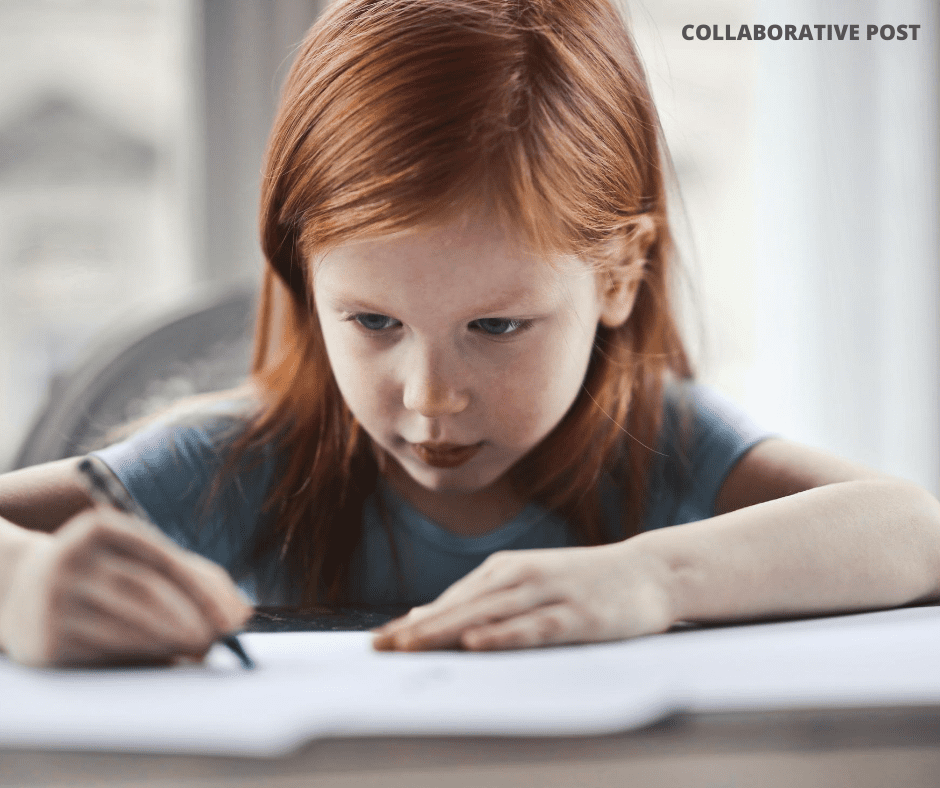
It’s important for children to practice their creative writing skills because it teaches them various different skills that they can transfer across multiple aspects of their education.
The benefits of creative writing
Creative writing encourages children to think outside the box and use their imagination. It helps improve their spelling and grammar and expands their vocabulary. In some cases, it may even improve their confidence and help with their ability to communicate with others.
These are all crucial skills. So, even if your child has no intention of becoming a world-famous author when they grow up, exploring creative writing is still beneficial to their overall education and personal development.
How to encourage creative writing
You’re probably wondering how to encourage your child to practice creative writing, particularly as writing a novel from scratch isn’t the easiest of tasks, but fortunately there are other, simpler activities you can suggest.
For instance, one option is to rewrite the final chapter of their favourite novel. This is far easier than starting from scratch because all the characters and the plot have already been created by a professional author. Alternatively, they could write a review of a recent book they’ve read, using plenty of adjectives to describe how the story made them feel and whether or not they would recommend it.
If your child does insist on writing their own story, be sure to encourage them to put together a mind-map first so that they can plan properly. Without a proper plan, it’s unlikely that your child will stick at their writing project and see it through until the end.
They will need to outline a beginning, middle and an end, perhaps using Todorov’s theory. This theory basically implies that all stories start with an equilibrium, where everything is well-balanced. Then there is some sort of disruption that interferes with the equilibrium. The story concludes with some sort of resolution to the disruption, usually at the hand of the story’s protagonist.
Understanding theories, like Todorov’s, and the key elements of a particular genre will help your child with their creative writing challenges. Encourage them to read from a young age so that they can develop their own opinions about what makes a good story. At Taunton School, a prep school in Somerset, and other schools around the UK, literature is a primary feature of English lessons. With that said, helping your child learn how to think critically when it comes to reading will really go a long way to helping them with their education.
Have you explored creative writing with your children yet? Do share your experiences below in a comment.