
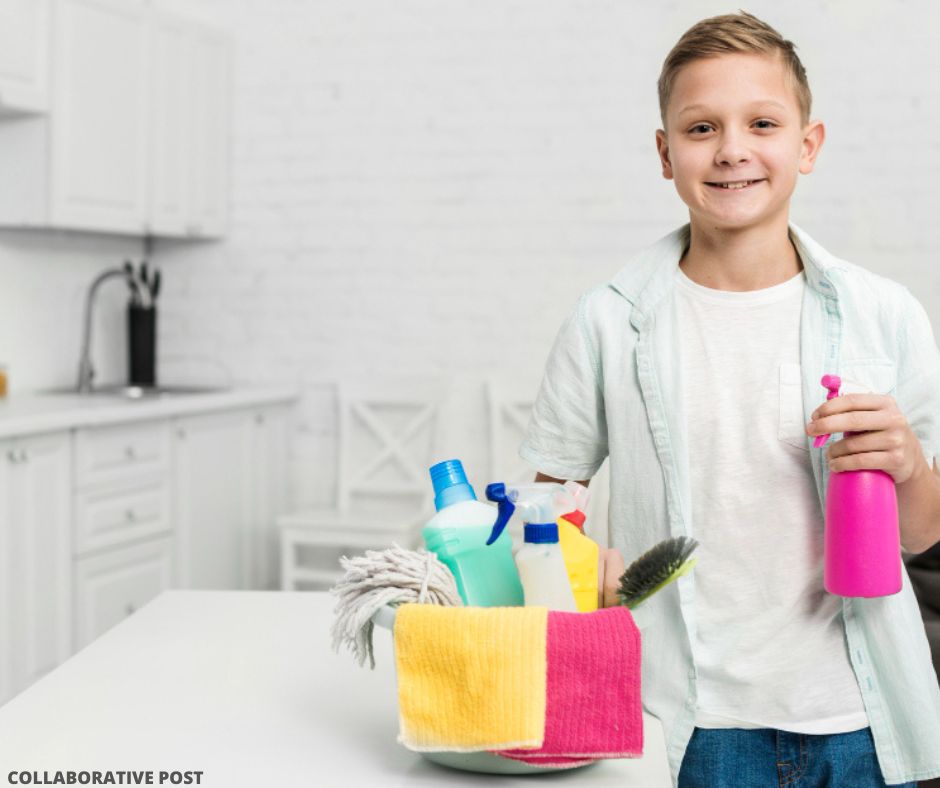
Teaching children responsibility through chores is in my view, essential for their development and success in life. As parents, we are responsible for teaching our children how to become responsible and independent adults. A way to teach them is to involve them in household chores.
Why are chores actually good for children? Well, there are several benefits to involving children in household chores. It helps children develop a sense of responsibility and accountability. When children have tasks to complete, they learn to prioritize and manage their time effectively, a crucial life skill. Moreover, involving children in household chores teaches them independence and self-sufficiency as they learn to care for themselves and their environment.
This also promotes a sense of belonging and teamwork, as everyone works together to maintain a clean and organized home. Following these strategies, parents can effectively teach their children chores and responsibilities, setting them up for success.
Benefits of Involving Children in Household Chores
Assigning chores to children helps them develop a sense of responsibility and accountability. When children have tasks to complete, they learn that they are responsible for their actions and the consequences that come with them. This helps children develop a strong work ethic and a sense of pride.
Parents can teach children important life skills and promote their independence by involving them in household chores. Children learn practical skills like cooking, cleaning, and laundry, which they will need as they grow into adults. When they complete chores independently, they learn to care for themselves and become more self-sufficient.
Involving children in household chores promotes a sense of belonging and teamwork in the family. When everyone works together to maintain the home, children feel like they contribute to the family’s well-being. This sense of belonging and teamwork can strengthen family bonds and improve communication.
When children complete household chores, they develop a sense of accomplishment and pride in their work. This can boost their self-esteem and confidence as they learn to take on responsibilities and complete tasks independently. Additionally, by contributing to the household, children feel valued and appreciated, further boosting their self-esteem and confidence.
But teaching children responsibility through chores takes work. It also comes with a lot of challenges.
Challenges of Teaching Children Responsibility Through Chores
Kids will be kids, and many children resist chores and responsibility, especially if they are used to being cared for by their parents. Parents may need to find creative ways to motivate their children, such as offering rewards, doing chores in a game, or setting achievable goals. You can also explain the importance of chores and responsibility and how it benefits the family.
Parents need to choose chores that are age-appropriate for their children. Younger children may be unable to handle complex tasks, while older children may become bored or disengaged with simpler tasks. You can start by assigning simple tasks to younger children and gradually increasing the complexity as they age.
You may find it challenging to find time to teach children chores and responsibilities while balancing other household responsibilities. It may be helpful to involve children in tasks that parents already do, such as folding laundry or preparing meals. Setting aside a specific time each day or week for chores and responsibilities, such as a Saturday morning cleaning routine, is also best.
Maintaining consistency and following through is essential when teaching children chores and responsibilities. Parents should assign tasks regularly and follow through with consequences if tasks are not completed. You can also provide positive feedback and reinforcement when children complete tasks, which can help maintain motivation and consistency.
However, if your child is busy with school and may need time off, you can also teach them that relying on laundry pickup and delivery is understandable at certain moments. They should also learn not to be hard on themselves and need rest.
Strategies for Effective Parenting in Teaching Children Responsibility Through Chores
It is important to start teaching children responsibility through chores at a young age and to be consistent in assigning tasks and responsibilities. This helps children develop a sense of routine and accountability, making it easier for them to handle more complex tasks as they age.
- Make doing chores fun and rewarding. Make sure to make them feel like doing laundry or other chores is manageable. You can break down the tasks into smaller steps and provide a demonstration. It is also essential to let them know that it is sometimes okay to rely on outsourcing cleaning, bringing them to the laundry service, and allowing them to place the laundry inside the washer and dryer. Waiting for the cycle to finish also teaches them patience.
- Encourage independence and decision-making. Parents should encourage independence and decision-making by allowing children to choose which tasks they want to complete and how they want to complete them. This can help children develop critical thinking, problem-solving skills, and a sense of ownership and responsibility.
Effective parenting in teaching chores and responsibility involves starting early and being consistent, setting clear expectations and providing guidance, making it fun and rewarding, encouraging independence and decision-making, modeling good behavior, and leading by example.


I just finished reading the article on “Why Chores Are Important for Teaching Children Responsibility,” and it’s spot on! The author highlights the significance of assigning chores to children as a means to cultivate a sense of responsibility and independence. The article provides compelling reasons why involving children in household tasks can contribute to their character development and future success. I appreciate the practical tips and suggestions on how to make chores engaging and age-appropriate. It’s a valuable read that emphasizes the long-term benefits of instilling responsibility in children. Thank you, Motherhood: The Real Deal, for shedding light on this important aspect of parenting!