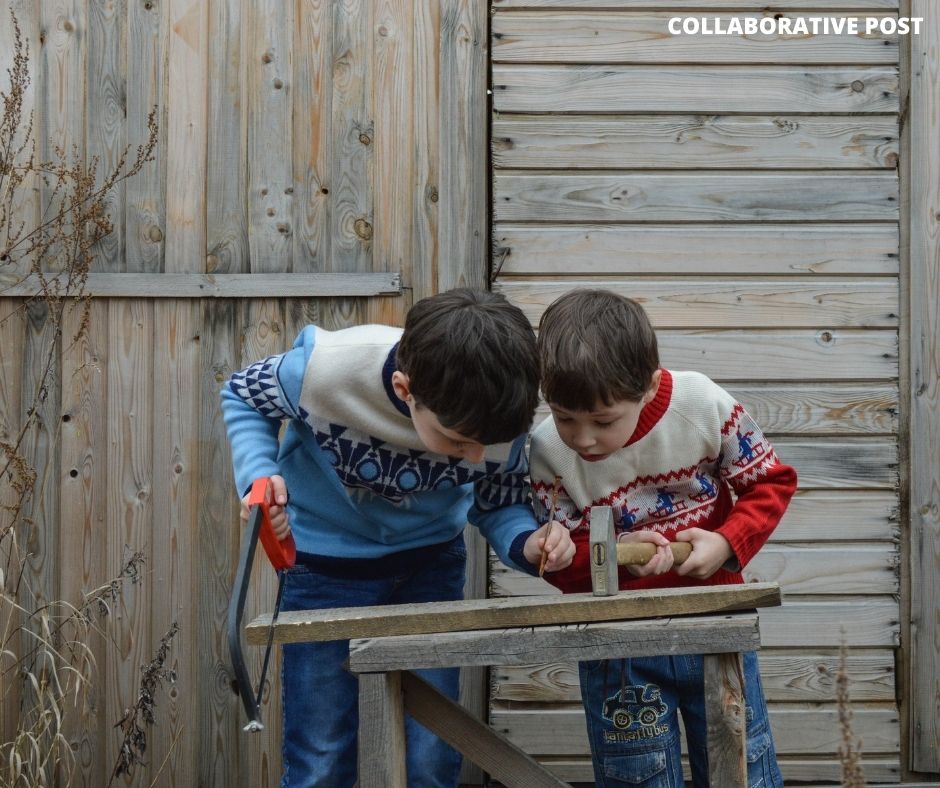
No topic is out of reach when wanting to teach the little ones new things. On my mind today are coach bolts – I know… out of everything that I could be thinking of, why am I thinking of bolts? We’ve recently been to the local hardware shop and, after many “what is this?” and “what is that?”, I realised that I didn’t have all the answers. However, these are things I should know…
You might not pay much attention to fasteners (like me!) but I think we should. After all, fasteners are used to put together most of the things we use. As Jenny in Neverland says, “Not a single structure and/or object will work properly without fixings. Have you seen a door work without hinges? Have you seen shelves be installed without a screw? Fixings and fasteners are essential.”

So, to help you and I, and our kids learn more about fasteners, I’m focusing on a particular type of hardware – coach bolts. For some expert advice, I’ve partnered up with Speedy Fixings, coach bolts supplier. Speedy Fixings are a local UK-based manufacturer and supplier of all kinds of products used in construction and DIY. With their extensive knowledge, I thought they would be the best to talk about all things coach bolts.
What are coach bolts?
Also known as carriage bolts or mushroom head bolts, coach bolts are a type of bolt that features a mushroom head. This head sits on top of a square neck. This design is used to prevent bolts from turning or restrict them from loosening. By having these features, these bolts are perfect for applications that require a high level of security.

When to use coach bolts?
This type of bolt is designed to join two materials together. “These types of bolts are ideal for projects that require you to fasten wood to wood as well as wood to metal. When bolting two pieces of wood together, coach bolts will offer a neat and clean appearance.” Says Buckets of Tea.
What is the difference between bolts and screws?
My Pinstrosity Life explains, “the main difference between bolts and screws is that screws are tapered fasteners and bolts are non-tapered fasteners. Screws either create their own thread in material or are fastened into an existing thread whilst bolts need to be fastened with a nut or washer to hold materials together.”
Photo by Vic B